Showing posts with label pets information. Show all posts

Monday, January 11, 2010

Guide to Fish Compatibility

Fish compatibility is the most difficult subject in the industry, and the greatest topic of controversy among professional aquarists. Those of us at the Aquarium Professionals Group with many years of experience are still learning about the subject. The problem is that there are no definite right or wrong answers when it comes to deciding which fish we can keep together in an aquarium. Some cases are obvious . . . or are they? No professional aquarist in their right mind would recommend keeping huge freshwater Oscars with tiny Neon Tetras. Yet the fact remains that our most experienced aquarists have seen the most improbable combinations of fish kept together without any compatibility problems. So as we began drawing up the first draft of our articles for this up-date, the question was raised: Why bother discussing an aquarium issue that is so conceptual that there are no definite facts that can be related to the reader?

http://www.salt-city.org/gallery/files/1/40056e01c138c38660bd10276dec163d.jpg

The answer to that question is simple, although the execution is not so easy. There are far too many unknowledgeable and/or unscrupulous pet and aquarium stores out there that don't know or may not care when they sell you incompatible fish. They want your money, and most do not offer adequate guarantees that cover for example, one fish eating another. We therefore felt we should at least provide some basic guidelines and tips to help ensure compatibility. These generalities should be used as a tentative guide, keeping in mind that when it comes to fish compatibility, nothing is written in stone!

http://t3.gstatic.com/images?q=tbn:kOEzuWgnnHJWDM%3Ahttp://stuartbradleyphotography.com/images/Nothing-written%2520in%2520stone.jpg

(joke),When shopping for a fish that you're unfamiliar with, ask a lot of questions. Take the time to look the fish up in an aquarium reference book.

http://www.thereeftank.com/forums/attachment.php?attachmentid=71025&d=1260734503

If you're shopping in a new store, make friends with the staff and owners. They may develop a case of "conscience" before selling you a fish that's incompatible with your aquarium or another specimen you want to buy.

http://yxhealth.com/wp-content/uploads/2009/07/Conscience.gif

Check the livestock guarantees of the store you're shopping in. If they only have a 24 hour guarantee, or no guarantee (common these days with saltwater fish), they may have no incentive to guide you carefully when it comes to compatibility. If the fish you buy causes trouble but doesn't die, they may not take it back for credit.

http://i.ehow.com/images/GlobalPhoto/Articles/4669399/CashBack-main_Full.jpg

As a general rule for all saltwater aquariums, and most freshwater tanks, new fish should always be added in groups of two or more. This helps to spread out the aggression in the tank. An aggressive fish that's already in the tank cannot chase two or more newcomers at once. This gives the new fish an occasional break in the action and allows them some recovery time.

http://www.petguideweb.com/imagens/image/images1/How%20to%20Set%20Up%20a%20Saltwater%20Aquarium.jpghttp://www.glasshabitatsaquariums.net/images/615_CWAMaple.jpeg

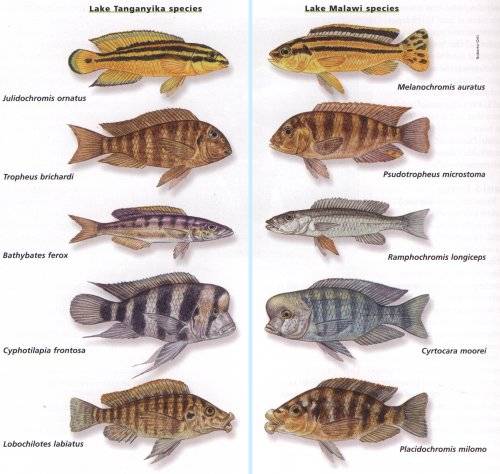
It is important not to confuse aggression with hunger or feeding habits. Just because a fish has a large mouth or eats whole fish in the wild, does not necessarily make it aggressive. Piranha are actually quite peaceful. So are most Moray Eels. African Cichlids are primarily herbivores (vegetarian), but are extremely aggressive. Even us so-called "experts" have a tendency to get a little anthropomorphic about our fish, by attributing human characteristics to our finned little buddies (see . . . there I go!). Fish behave almost entirely through instinct. An instinct to strike out at a tank mate that's invading a territory is not "acting mean". It’s simply an instinctual response to an external stimulus. That isn't to say that fish can't "learn". Anyone who's ever seen their fish splash water in the tank in order to get fed would disagree. In most cases though, what we perceive as mean or cowardly behavior, is simply instinctual behavior that is genetically programmed. The fish was literally born to follow these behavior patterns. Unlike dogs and cats, there is no proven way to modify instinctual behavior in fish.

http://www.corbisimages.com/images/AX933923.jpg?size=67&uid=5AF96A99-1B75-4208-A890-C03475D95A22

Nearly all saltwater fish, with few exceptions (such as seahorses), are aggressive to some degree. They come from a hostile environment, and behave accordingly.

All aquariums have a pecking order among their inhabitants. There will always be an "Alpha" specimen at the top of the order, and a series of less aggressive "Beta" specimens all the way down to the bottom of the pecking order. If you remove the most aggressive fish from an aquarium, another will take its place at the top of the pecking order. Generally, as long as no actual bodily damage is occurring, it's best to leave well enough alone. Even an occasional nipped fin is no real cause for alarm (Missing fins are another story).

Nearly 99.99 % of all saltwater aquarium invertebrates do not belong in a marine fish-only aquarium. Invertebrates are the natural foods of the fish. The one good exception are hermit crabs, which are somewhat protected by the seashells they carry. You can experiment with anemones, and maybe a lobster or shrimp, as long as you understand that it's an experiment, with a possible disastrous (and expensive) outcome.

As a general rule for both freshwater and marine fish, if you want to combine several specimens together that you're unsure of in terms of compatibility, use the following plan of action:

1. Determine the relative aggressiveness of each specimen you want to put together on a scale of one to ten by reading up on each and asking questions.
2. Buy the two most peaceful fish FIRST, and get the largest specimens you can find.
3. Each set of fish that follows should be a little more aggressive than the first, and smaller than the last set you added.
4. The last fish that you add should be the most aggressive, but also the smallest of the desired group.
5. Synopsis: Add the least aggressive fish first and make sure it will be the biggest fish in the tank. Add fish in order of increased aggressive behavior with each fish being smaller than the last. The most aggressive fish is added last, and should be the smallest specimen in the tank. Using this method allows the more peaceful fish to set up their territories first. By making the more peaceful fish larger, you give them a fighting advantage over the more aggressive species.

When considering the purchase of larger, more aggressive, or very active fish, beware of any definite statements made by salespeople that the specimen will be compatible. Statements like "Oh that will definitely work.", as opposed to "It should work." deserve a second opinion. If you're in doubt, they should be too.

http://mecsexy.smugmug.com/photos/376428784_QYNcK-S.jpg

Unfortunately, it is all too common to see incompatibility in action in the tanks at a pet or aquarium retail store. We've seen plenty of cases where every fish in a pet store tank is hiding except one, who's calmly cruising the tank looking for trouble. This can be of educational benefit though, in that one can learn first-hand about certain species that don’t get along with one another.

http://www.guyanagateway.org.gy/files/bass.gif

As a very loose general rule, with many exceptions, fish that are extremely hyper-active may stress fish that are extremely peaceful and slow-moving. Use caution, and watch how the other fish in the tank react to the fast-moving specimen.

If a fish is alone in an aquarium, find out why it's by itself before you buy it, even if it looks like a great specimen. It very well might be in "jail" for a serious felony or two.

Seahorses are rarely compatible with other saltwater fish. Freshwater Bettas (Siamese Fighting Fish) are never compatible with each other, and are rarely compatible with other long-finned fish or very fast-moving fish. Discus (freshwater) are extremely difficult to keep, and will rarely work in a community tank. Killifish (freshwater) should be kept by themselves in a small tank, and are not usually compatible in a community tank.

http://www.rocwood.com/images/O_seahorses3_SM.jpg

Fish with large mouths relative to the rest of their body usually EAT OTHER FISH! A Frogfish, Angler, Toadfish, or Stonefish may be cute in a homely sort of way, but they can swallow another fish nearly two and a half times their size! If you have small fish, some other fish to look out for in saltwater are: Groupers, Lionfish, Snappers, Jacks, large Triggers, Trumpetfish, and large Wrasses. Some of the fish to be cautious of, if you have a peaceful freshwater community tank, are: Scats, Pacus, all large Cichlids, Gars, Arowanas, Tinfoil Barbs, Bala Sharks, African Cichlids, and even Silver Dollars. Remember that even if the fish is a small baby specimen, it’s going to grow up!

If all the fish are crowded together on one side of the tank, and one fish is at the other end of the tank, that lone fish is probably aggressive!

Another sign that there’s an aggressive fish in a tank is if one or more fish are lying on their sides or nose-up at the surface of the water. This is a submissive posture. Watch the tank for a while and eventually, you’ll see the "culprit" go up and nip at the fish that are submitting. PLEASE NOTE: The reverse could also be true in this case. The store may have put one or two specimens in the tank that are too peaceful to fit into that particular community.

http://news.nationalgeographic.com/news/2009/02/photogalleries/monster-fish-congo-missions/images/primary/090213-04-monster-fish-congo-missions_big.jpg

(We hesitated to include this) Taxonomy is the classification of organisms in an ordered system that indicates natural relationships. Fish (as well as all other living things) are classified by comparing their anatomical, physiological and behavioral differences. The more similarities there are between two species, the more closely-related they are considered to be to one another. Animals are classified in the following order: Kingdom, Phylum, Class, Order, Family, Genus and Species. For example: Humans are classified as follows: Kingdom-Animalia (Metazoans), Phylum-Chordata, Class-Mammalia, Order-Primates, Family-Hominidae, Genus-Homo, Species-sapiens. Our "specific name" is Homo sapiens. Our common name is "Human". Taxonomy can apply to fish compatibility when you are considering purchasing two different fish that are closely-related (in the same Family or Genus). They might not get along if they are very similar in shape, color, feeding habits or behavioral patterns. This is truer in saltwater, where fish that belong to the same Genus will often not get along. In freshwater, larger, more aggressive fish that are also closely related may not be compatible with one another. We are in no way stating that any two closely-related fish are incompatible. In freshwater aquaria for example, most of the smaller, peaceful-community fish should be kept in groups or pairs. We are only saying that if you have a marine tank, or a freshwater tank with larger fish, caution should be exercised when considering a purchase of fish that belong to the same Family or Genus as a fish you already own, or another you’ve considered buying. If in doubt, give us a call.

Other factors to consider when buying two fish of the same Family or Genus, are:

The size of your tank (The bigger the tank, the more space there is for territories) The amount of decorations you have in your tank (Are there enough caves and hiding places? Sometimes buying more decorations with a new fish helps to establish new territories.) Do the fish come from the same geographical location? (If the answer is yes, they are less likely to get along.) Do the fish have very similar body shapes, coloration, or markings? (Even fish that are not closely-related may not be compatible if they look similar to one another.).

http://officespam.chattablogs.com/Berlin-Cylindrical-Aquarium.jpg

In most cases except one definite exception, two saltwater fish of the same species may not be kept together. Exceptions to this are some smaller, relatively peaceful marine fish such as Percula Clowns, Skunk Clowns (but not most other Clownfish), most Gobies, Blennies, some Damsels, and a few others. In some cases, marine fish of the same species may be kept in groups of three or more, but never in pairs. Exception: Two marine fish of the same species that were captured together in the ocean, and are being sold as a "pair" are always compatible if they’re in the same tank together at the store.

In freshwater, be careful buying mated pairs of Cichlids, Angelfish, large Gouramis, or any other fish if you have a peaceful community tank. Depending on the species, breeding pairs of fish, even smaller specimens, can get aggressive when it’s time to breed. By the way, occasionally there are "mated pairs" of saltwater fish offered for sale. If you love the fish and they’re healthy, by all means, buy them. Just don’t expect them to breed in captivity. The odds against them actually producing are greater than your odds of winning the lottery.

http://lawofattractionenterprise.files.wordpress.com/2009/10/islottery070824ms1-main_full.jpg

If you’re replacing a fish that died with another of the same species, always remember that two fish of the same species may not exhibit the same behavior. If you had a peaceful Humu Trigger, the next one may turn out to be "mean". If the last Blue Tang you had was aggressive, the next one you buy may be a "wimp". Just when a supposed "expert" claims that a certain fish is peaceful, someone comes along with a story about the same fish that became a holy terror in their tank!

If you have live plants in a freshwater tank, always ask if the fish you want eats plants.

If you have a freshwater tank, beware of buying brackish water fish for your aquarium. Brackish water fish are species that inhabit delta, marsh, coastal estuary and saltwater wetland ecosystems, where rivers feed into the ocean. These fish live in water that is slightly salty. Although they can survive for a while in 100% freshwater or saltwater, they will eventually die or do poorly if they do not get a fair amount (but not too much) salt in their water. This level of salt is too high for most freshwater fish, and too low for saltwater. Almost all aquarium and pet stores keep a wide variety of brackish specimens in their freshwater aquariums. Unfortunately, many of these stores will rarely inform you of the special requirements of these fish. They are: Archerfish, Scats, Monos, Anableps, all Gobies, Mudskippers, Walking Catfish, most Puffers (with only two true freshwater exceptions), most Mollies, Silver Sharks (a catfish species), Half beaks, Psychedelic Eels, Reed Eels, Bamboo Eels, and nearly all Pipefish (There is a true FW Pipefish, but it’s extremely rare).

http://www.fisheries.vims.edu/ctils/prey2/pipefish.jpg

Some Rough Fishes

That cute little fish you bought could turn into your biggest headache if you don't think before you purchase, so here are a few words to help you in your selection when considering buying that little cutie. Also here we will be talking about which fish will live with others in harmony. although even after careful selection, we sometimes get a small fish that will bully others a great deal bigger than themselves, but luckily this mainly happens at breeding time.

http://www.betta-fish-care.net/images/two-bettas-larger.jpg

Any fish can become a rogue, it doesn't necessarily have to be a big fish, as even some small species of fish can become quite dominating at times, especially at breeding time.

Generally when we speak of rogues people tend to think of the bigger species like some of the Cichlids,

http://www.accuracyingenesis.com/cichlids.jpg

and many of this group do get to a stage where they will only tolerate fish either the same size, or bigger than themselves. Other types of rogues are the ones that will uproot everything you plant, move vast amounts of gravel that leaves your tank like a moonscape, and even move small rocks if they are in their way. Others will ram the heater against the tank side, or pull the uprights from the undergravel filters, and on occasions decide to knock the lid off the tank and try their hand at jumping from the tank and onto the floor. Many of the big Cichlids will attack your hand if you try to clean the tank or move something that will alter their environment, while others will practically roll over and let you scratch their belly. Just by the last sentence we can see that not all Cichlids are the same, so we can't brand any fish as being a rogue.

So what causes a fish to be aggressive? Several things can cause this, many of which we can do our best to avoid. Fish near or actually spawning, or looking after young should never be trusted with other fish if the are of an appreciable size. At this time adult fish become very possessive about territory and the safety of their young, so now is one time you should leave well alone and let the fish get on with what they were born to do. In some situations we may have to remove either one or both the parents, but Cichlids in general tend to take care of their young right up to the time they are ready to spawn again, and it has been known for them to care for two broods of fry only weeks apart. Many of the Mouthbrooders also do this and can have more than one brood all trying to retreat into the mother's mouth. Great stuff.

Many Cichlids are very selective about their partner, and many once mated, will remain with that same partner to the end. If one dies, then it is sometimes hard to get the remaining fish to accept a new mate, and I have found this to happen with the Angels, the Jewel Cichlids, and the Firemouths, but again, not all fish are the same, but in general Cichlids seem to create a very strong bond with the partner they choose. In more than one instance I have had the remaining fish die within a short while after losing its partner.

Rogue fish are generally territorial fish and will set up an invisible area that they call theirs and will not allow outsiders to move into their area. Not much can be done here, but re-arranging the tank sometimes helps by confusing the fish as to where his territory starts and ends.

If the fish in question is causing harm to the more docile occupants of the tank, then your only option is to either move the aggressor, or move the peaceful fish. One should really consider a spare tank for these situations, and when not in general use it can be used as a quarantine tank, or for holding newborn fry, but it should always be setup correctly at the right temperature and ready for any emergency.

Even the common Zebra Danio can become aggressive if others in the tank are smaller or not quite as quick as it is. Keeping just one of these fish tends to cause this problem, especially if the Zebra has grown to an appreciable size.

Take the little Dwarf Gourami. A wonderful colourful fish that is usually quite docile, but catch him at breeding time and it's a different story. This little fellow can be a real terror if he is guarding the nest and will send most fish twice his size running in fear to the other end of the tank. This will happen with most of the Gourami species, and the Bettas.

So what can you do to stop it? If you have a fish that bullies others you could try to find something to distract it. Many fish that bully are single species in a tank, like a lone Oscar or Angel. You could try getting another to take its attention away, and this works in many cases.

For the fish that are getting bullied, try additional planting, more places for them to hide in the way of rock arrangements with hiding places that the bullying fish can't get into. As a last resort your LFS (Local Fish Store) might take the large fish in trade for some smaller ones that would be less problematic.

You should not confuse breeding actions with bullying, as most fish tend to look and act aggressive at breeding time. In the case of the Livebearers the males will constantly harass the females, at times leaving the female quite exhausted. Nothing much can be done here as this is nature's way, but if the females become stressed at all you could try separating them from the males for a while, preferably till they have given birth. Returning to the Cichlids for a moment. Many of these species will lock jaws and seem as if they are going to rip each other apart, and this can become quite scary at times, and others will chase their mate around the tank as if they were going to kill it, but in many cases it is just a normal breeding pattern.

Fishes,NOT for the Beginner

There are some fish that the beginning aquarist should avoid. Then there are still others are others that do quite well in a beginner’s tank. And there are even some fish that get along quite well in the "beginner tank".
https://blogger.googleusercontent.com/img/b/R29vZ2xl/AVvXsEizTDgPk_5YKXIqFtcNM-UU27pcTy1rI3zxbPy3GPySoJnYvX7mGaK3jPwP96lnPx9UmalinMhmEm1EXSeLiweol-naqHTIcHHN9L0eN8rleSrzYMcRDBAA_kYrf1MgwG-I0EwdxOEzWS28/s320/Beginner+Fish+Tank.png

What is the difference between a "beginner tank" and a beginner’s tank? A beginner’s tank is simply one owned by a beginner. But the term "beginner tank" also implies a certain stigma…for better or worse it is set up in the typical way that beginners set up their first tank. The typical way a beginner, in Calgary in the year 2000, sets up a tank is this: the tank is about 40-liters in capacity, has an undergravel filter, a semi-submersible heater, an inexpensive single tube (or incandescent bulb) light/hood, a small power filter, and plastic plants. It is usually stocked with a few live bearers, a few tetras or barbs, and a single Corydoras catfish.

http://www.fishlore.com/YourTanks/kl-corydoras.jpg

However, it is not necessary for a beginner to start out that way. It is possible (however unlikely) that the beginner was introduced to the hobby by an advanced aquarist who introduced him to living plants at the same time. Such a beginner could set up a fairly advanced looking tank the very first time out…complete with living plants and the more comfortable surroundings, more stable water conditions, and increased oxygen supply that plants give to fish.

But both planted and unplanted tanks are likely to suffer from the same beginner’s mistakes: over feeding, under feeding, over crowding; incompatible species mixes, insufficient climatization, temperature fluctuations, and intermittent neglect. It’s just that the consequences of this aren’t as bad if the tank has plants in it.

http://hydrophytesblog.com/wp-content/uploads/2009/06/20-vi-09-tank-ii-b.jpg

So what fish are good beginner’s fish? Actually, most of them, so a better question would be "what fish aren’t". And an even better question would be "which fish, among those fish a beginner is likely to buy, aren’t". A stingray is not a good beginner’s fish, but at $140 a pop a beginner isn’t likely to buy one anyway. However, there are several fishes that are commonly sold to beginners that in my opinion should not be.

http://yogaforsurfers.files.wordpress.com/2009/10/stingray-3.jpg

First of these is the fancy guppy. On the face of it, the guppy should be a perfect beginner’s fish: easy to breed, small, active, non-aggressive. And wild type guppies are. But fancy guppies are very often so inbred that their genetic strength is pretty much down the toilet. Fancy guppies have very short reproductive lives (often being "old" by nine months of age), they swim only with labor, and have lowered fecundity. They also are prone to "death without known causes". But wild-type guppies are often no better, as the ones available nowadays are relegated to the "feeder" tank, sold for 10¢ a piece, and subject to neglect. So if the wild-type guppies are likely to be neglected, and the fancy guppies are likely to be genetic trash, should the beginner still have guppies? Yes, but I would definitely not buy them from a pet store… go to a guppy breeder. Another option is buy "Endler’s livebearers". These look a lot like guppies, but they are almost certainly a separate species. They are endangered in the wild and being maintained in the aquarium as a genetically sound fish. And of course they tend to be very well cared for.

http://www.freewebs.com/keith565/snakeskin%20endlers.jpg

Another fish for the beginner to avoid is the molly, of all types. Many domestic strains suffer from the same genetic defects as fancy guppies (there is even a misshapen "balloon" molly available, shudder). And wild mollies are surprisingly expensive. Also quite surprising is that mollies are quite sensitive to changes in temperature… surprising since they live quite happily in central Florida where winter temperatures can easily drop below 15C. And mollies like some salt in the water, which is often not good for their tank mates. It is best to leave mollies to the advanced hobbyist willing to provide them with their own quarters.

http://farm4.static.flickr.com/3595/3353362847_c2ab5292d4.jpg

Swordtails might not be such a great idea either. A much better idea than mollies, perhaps, but I would still only recommend them with some trepidation. There are several types of high-fin swordtails available that are simply genetic garbage. These fish are even unable to breed at all without artificial insemination. But even setting aside these inbred-to-oblivion fish (which I can’t imagine anybody wanting), the typical swordtail can be a fairly aggressive fish. This doesn’t seem to get mentioned much, but swordtails can be very bossy. They really need more elbow room than the typical beginner’s tank will likely provide.

http://www.stltoday.com/blogzone/the-platform/files/2008/08/swordtail_fish_1_opt.jpg

Another fish that I would not recommend to the beginner is the neon tetra. Neon tetras were historically considered to be very difficult fish. Most certainly not for the beginner. But then Southeast Asian fish breeders learned the secrets of neon breeding and started mass-producing an aquarium-strain neon. They bred a fish that looked like the wild neon but was much more adaptable to the aquarium environment. The result was a fish that was inexpensive, colorful, peaceful, and hardy – the perfect beginner’s fish. So why don’t I recommend them? Well, neons don’t seem to be very hardy anymore. I am not sure why. Maybe its because their price has dropped so low that they are no longer given adequate treatment during shipping ("who cares if they die, it would be cheaper to just order another batch than package these properly"). Or maybe the aquarium neon has now become so inbred that it’s suffering from its own genetic deficiencies. Maybe they are selling poisoned fish so that the customer will come back and buy more. I don’t know. But I do know that a lot of neons seem to die within a week of being purchased.

http://dm.hccfl.edu/cgs2822/07fa63686/jgammons/FinalProject/images/Freshwaterfish/neon_tetra.gif

Another fish often sold to the beginner that should not be is the Chinese algae eater. Hell, these fish shouldn’t be sold to anybody. They are also mass-produced in Southeast Asia nowadays and so are sold as inexpensive algae eaters. But they really don’t eat all that much algae. Instead, they seem to prefer to suck the slime off of other fish. And the older they get, the less algae they eat, and the more slime they suck. They are also prone to extremely hyperactive behavior (try catching one with a net sometime) and sudden death (from heart attack?). In a suitably large tank with lots of cover they might settle down to a long life, but after they reach 10cm or so in length they will mercilessly harass their tank mates. I once owned an enormous 25cm monster that was probably the most annoying fish I’ve ever met.

http://myfishtanks.info/wp-content/uploads/2009/07/697px-Chinese_algae_eater.jpg

Dwarf gouramis. There has been an explosion of new color strains of dwarf gouramis around lately, again thanks to Southeast Asian breeders. And so nowadays pet stores will have several tanks of colorful dwarf gouramis at low prices. But I would not recommend them to the beginner. They are very shy fish that really can’t compete with the barbs and tetras the beginner will likely put them in with. Give them their own well-planted tank in a quiet corner and they are wonderful fish. In a tank without much cover (but with lots of tiger barbs) they will be thin, pale, and unhappy.

http://www.freshwaterhobbyist.com/infopages/images/neonbluegourami.jpg

The most common fish purchased by the beginner is the goldfish. There are two things that could be wrong with this. First of all, many beginners try to mix goldfish and tropical fish. This is never a good idea, and goldfish should not be kept at temperatures above room temperature. And the second problem is that practically all beginners fail to give their goldfish enough room. Adult goldfish need at least 100 liters of water per fish. Not even one can be housed in the typical beginner’s sized tank for the long term. But for the beginner who keeps goldfish at a suitable temperature in a suitably large tank or pond, goldfish are very good fish indeed. Just stay away from those grossly malformed varieties that can’t even swim properly anymore. Like all fish that have resulted from such misguided breeding programs, their genetic soundness is absolutely miserable.

http://www.ccpvideos.com/galleries/images/Fantail%20Goldfish%20-%20Esther%20Melton.jpg

That’s everything I would recommend the beginner not get. But what should they get?

Fish Make Babies,how ?

Fish breed in many ways, and yes you can watch. In fact, watching fish breed is one of the great fascinations in the hobby because there are so many interesting breeding strategies among fish.

There are two main strategies that fish use: egglaying and livebearing.

Livebearing fish do what the name suggests. The female gives birth to fully formed, free-swimming young. The female fish is internally fertilized by the male fish, and carries the fry for about a month before delivering them. Upon delivery, the babies swim off, hide, and begin searching for food.

http://www.wetwebmedia.com/CyprinidontiformFishPIX/Livebearers/Poeciliids/cream1.jpg

Livebearers include the popular mollies, platies, swordtails, and guppies. Other livebearers are halfbeaks, anableps, and fish in the Goodeid family. They are easy to sex, as the female is larger, and the male has a rod-like anal fin called a gonopodium that he uses to internally fertilize the female. After fertilization, the female can produce multiple batches of babies without a male present.

http://t1.gstatic.com/images?q=tbn:QlZtZKSqqyMhuM%3Ahttp://www.sundag.com/images/Catalogue/1_1.jpg

Egglaying is also what the name suggests: the fish lay eggs instead of giving birth to little fish. As the fish grow, they hatch into fry with an attached yolk sac, and then mature into fish. The process usually takes around a week to 10 days, although it can vary widely.

Egglayers have many methods of laying their eggs
Egg scatters usually scatter eggs around weeds, or onto gravel. The male chases the female during spawning, and the eggs are fertilized as they fall. Spawning runs can be spectacular to watch since the fish race around the tank and ignore anything else, including food. Examples of egg scatterers are tetras, barbs, rasboras, and danios.

http://www.fishdeals.com/livebearers/gallery/Mollies_Platies.jpg

Substrate spawners are a little choosier about where they put the eggs. They lay eggs that attach to some sort of substrate. Plants, rocks, wood, and even the aquarium glass may be chosen as a spawning site. Both fish participate in the egg laying, with the male fertilizing the eggs as the female lays them. Examples of substrate spawners are many catfish, some cichlids, and killifish.

http://www.buyaquariumfish.com/wp-content/uploads/2009/11/maleguppy-150x150.jpg

Bubblenest builders lay their eggs in a nest of bubbles blown by the male fish. The bubbles are held together with saliva and look like foam. They tend to attract infusoria that the babies can eat, and keep the eggs at the surface of the water, where they are well-oxygenated. The eggs are laid a few at a time, and carefully placed in the nest where they hatch. Examples of bubblenest builders are bettas and gouramis.

Mouthbrooders actually keep their eggs in their mouths until the eggs hatch. The eggs are again laid a few at a time, and once the male fertilizes them, the parent doing the mouthbrooding gathers them up in his/her mouth. That parent eats sparingly, if at all, until the baby fish are released. Examples of mouthbrooders are male arowanas and female cichlids.

Marine fish also lay eggs. Some are substrate spawners, but many lay pelagic eggs that float in the plankton. There the eggs hatch into a larval stage, and the larvae float freely and eat tiny plankton until they grow into fish. See the Moe reference for a more complete description.

Breeding and Agression

``Help! Why have my angelfish (or kribs or African cichlids) started killing everything in my tank?''

``Why did my female platy just turn around and eat her babies?''

``I think my tetras spawned. Where are the eggs?''
Parental care in the fish world varies widely. Parents can be anywhere on a continuum from eating all their eggs or fry, to both parents fiercely guarding their eggs and fry.

Many fish parents show some common behaviors, so I will discuss them here.

Most fish consider any and all fish eggs and young to be a tasty treat. Therefore most fish will not hesitate to snack on any they find, including their own. This means that egg scatters and many substrate spawners really cannot be bred in a community tank, as the eggs will quickly be eaten by the parents and other fish. Marine fish and invertebrates also eat eggs. Livebearers are especially notorious for eating their young.

A few fish ignore their eggs or fry, and so can be bred in a species tank. White cloud minnows can breed this way, and many killifish will at least ignore the eggs. Baby killies are fair game, though. Guppies will also often ignore babies.

Other fish have one parent that guards the eggs and fry. Most bubblenest builders and mouthbrooders operate this way, as do some substrate spawners. The responsible male or female stays with the eggs and young, until they are free swimming. With bubblenest builders, the male tends the nest, blows bubbles as they pop, and keeps any falling eggs or fry in it. He will also defend the nest against other fish. Mouthbrooders simply hide their eggs in their mouths, and some substrate spawning catfish will hide the eggs underneath them. Certain substrate spawning cichlids also have one parent care for the eggs and fry.

A more common setup among cichlids is to have both fish guard and care for the young. This setup can be really fascinating to watch. The parents will take turns fanning or blowing fresh water onto the eggs, and removing any fungused eggs. They will also fiercely defend the spawning site, which can often cause injury or even death to other tankmates. Once the eggs have hatched, the parents will also guard the fry. Some fish will even move the fry to a different place each day. Once the babies are free swimming, some fish continue to guard them, while others end their parental duties. Many African cichlids guard their babies until they spawn again. Discus even feed their babies off of their slime coats.

A more extreme version of guarding is practiced by some Tanganyikan cichlids. There, older siblings will stay around the nest and help the parents defend subsequent spawns. The babies are allowed to stay until breeding age, when they are driven off.

Breeding Tanks

``My fish just laid eggs. How do I keep the eggs or babies from being eaten?''
The most common way to keep eggs from being eaten is to use a separate breeding tank. There the parents can spawn or give birth to their young, and be removed once they are done. Egg scatterers can be placed over a piece of netting, a grate, or a bed of marbles to protect the eggs as the fish spawn. Bubblenest breeders and mouthbrooders can be left in the tank until they stop caring for the young. Livebearers can be allowed to give birth in a dense thicket of plants or plastic spawning grass, so the babies can hide until the mother is done giving birth and is removed.

A breeding tank also is good because it can be kept clean. Eggs and fry need very clean water to hatch and grow. There are also no adults around to compete with the babies for food. Many breeders use a bare tank with only a sponge filter as filtration. Debris and extra food are easily seen and siphoned off daily. Frequent water changes can be done on the tank, as there are no other fish around to stress.

Another solution is to allow fish to breed on yarn mops, a plant, or a piece of slate or glass in the community tank. The eggs can then be moved to the breeding tank to grow. This works well for angelfish, catfish, and Australian rainbowfish. Killifish eggs can be collected from peat or yarn mops and set in a separate container or dried to incubate. Livebearers can be bred in a commercial breeding trap or breeding net within a community tank. The trap separates the babies from the mothers and then gives the babies a safe place to grow.

Some cichlids protect their babies well enough to just be left in a community setup, although this can stress the other fish in the tank. In fact, there are species of cichlids that will turn on each other if there are no other fish in the breeding tank for them to threaten.

Breeding Requirements

``I have fish in a breeding setup, but they just won't breed.''

``Why do my fishes' eggs keep fungusing and the fry dying?''
Many fish will not breed successfully without specific requirements. These include:
A mix of male and female fish.
I know this sounds obvious, but some fish are not easy to sex. In species that are difficult to sex, is best to start out with at least six young fish so that you are certain of getting both males and females. Starting with many fish also gives monogamous fish a chance to pick compatible mates. Sometimes if a single male and female are introduced, they will not breed. Other fish, like livebearers, killifish, and polygamous cichlids need more females that males so that females are not harassed by amorous males.
Extremely clean water.
Most fish will not breed if there is any ammonia or nitrite present, and large amounts of nitrate are toxic to baby fish. Some fish, especially tetras, must be bred in a breeding tank that is bare and sterile so that their eggs do not fungus. For more information about clean water, see the beginner FAQ.
A varied diet.
Fish that are producing eggs need better food that fish that are just living in a community. Breeders call the process of specially feeding parents conditioning. Conditioning foods include live foods, fresh frozen foods, or spirulina based foods. Find out the specific requirements of the fish you intend to breed. If you need information about live foods, see the live food FAQ.
The correct environment.
Fish that breed on substrates need proper substrates to breed on, like peat, rocks, shells, or plants. Some fish are shy and require a lot of cover, caves, or dim light. There are also fish that require a particular water chemistry to breed. Examples are discus, which require very soft, acid water or African cichlids which require very hard, alkaline water.
External cues.
Many tropical fish breed in the rainy season. When it rains, streams flood, the water hardness drops, and there is thunder and lightning. Adventuresome breeders with rainy season fish may try large water changes with distilled water, watering cans to simulate rain, strong currents, and even flashing lights and loud noises. Temperature changes may also stimulate spawning, as may changes in the light/dark cycle.

Raising Fry

``My fish bred, but I cannot raise the fry to adulthood.''
Rearing fish can take some work. Baby fish require clean water, and some require special foods.

Baby livebearers are usually the easiest to raise. Some will take finely crushed flake foods from the start, and only require frequent water changes to keep up with their growth. They also need algae or spirulina.

Baby egglayers are often more difficult to raise. Most are too small to eat adult fish foods, and so require special foods. Live baby brine shrimp are the food of choice for most baby fish, although some require even smaller infusoria. Sifted daphnia also work. Baby algae eating catfish require algae or blanched vegetables. There are also commercial fry foods that work or, in desperate situations, cooked egg yolk. Be careful, though, because non-living foods pollute the tank water terribly -- especially egg yolk.

Actually, keeping the tank water clean is probably the biggest challenge in raising fish. The growing fish require lots of food, and they are not very good at finding it which means even more must be added to the tank. As in any fish tank, adding lots of food must be balanced with keeping the water quality extremely high. In fact, fry require cleaner water than adult fish. Frequent water changes are a must, as is efficient biological filtration. Baby tanks often require daily water changes of up to half the tank. Sponge filters are the preferred method of filtration because they are great biological filters but cannot suck up baby fish.

Marine fish larvae have the strictest requirements of all. They must be fed extremely small plankton or rotifers in a tank with near-perfect water. For more discussion of marine fish rearing, see Moe.

Finally, as the baby fish grow, they must be transferred to larger quarters. Clearly the 10 gallon tank that housed 100 fry cannot house those 100 fish for long. Betta breeders have even more work on their hands, since the little male bettas will fight and have to be put into separate jars or a partitioned tank.

``I have a ton of baby fish. What do I do with them?''

``Can I make any money breeding fish?''

Finding homes for baby fish can be almost as much of a challenge as breeding them. Young fish can be given away, auctioned at aquarium society auctions, traded for other species, or sold. Pet stores will sometimes take African cichlids, guppies, and bettas, but many only give store credit rather than cash.

As for turning breeding into a commercial venture, remember the laws of supply and demand. For most common community fish, pet stores can order whatever they want whenever they want it from importers, fish farms, and wholesalers. The hobbyist, on the other hand, has occasional batches of fish that the store may not need or want at that time. The only thing on your side when you walk into a store with a batch of unrequested fish is that locally bred fish are often healthier and less stressed that fish that have been shipped and must be acclimated to local water conditions.

If you insist on breeding saleable fish, try rare catfish, rare rainbows, African cichlids, show quality fancy guppies, or marine fish. Those are all difficult for stores to obtain. To make money selling more common fish like angels, barbs, tetras, cory cats or livebearers (other than guppies), you need many breeding tanks and breeding pairs of fish to assure a constant supply. You must also have fish of consistent quality.

Personally, I would recommend that you breed fish for the sheer pleasure of it, rather than turning your fun hobby into a business venture. There is nothing like seeing a pair of cichlids court, disappear into a cave, and emerge in a few days with a swarm of babies.

Wednesday, November 18, 2009

Hairless Rodents

Hairless mutations of some of the more commonly kept rodent species are becoming more and more popular. There are currently hairless guinea pigs, mice, rats and Syrian hamsters readily available in the pet trade. Though basic care is similar to their furry counterparts, they do tend to need more specialized care and are not recommended for beginners.
http://www.angelfire.com/realm2/lex_exotics/hairlessrat.bmp

Rats and Mice

RATS

There are two basic types of hairless rats, true hairless and 'patchwork' hairless.

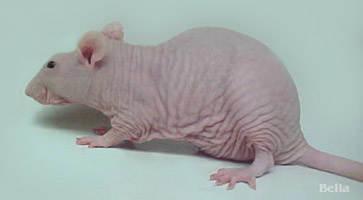
True hairless rats have no fur at all on their bodies and usually no whiskers either. Sometimes they have fur as pups which falls out by the time they are 2-3 months old. There are many different genetic strains of true hairless, most if not all of which have come from laboratories, where they are used extensively for medical research. They are missing a part of their immune system called the thymus, which makes them susceptible to disease and allergies. Depending on which strain they are they can be prone to tumors, eye and respiratory infections, heart or kidney disease, diabetes or skin problems. The average lifespan of true hairless rats is 9-18 months old.

As it is impossible to tell what strain a true hairless rat is without genetic testing, it is important to obtain true hairless rats from reputable breeders who can provide a pedigree. Breeders are working on stronger stains of true hairless rats through out-crossing with healthy furred rats. Hairless females with few exceptions do not make good breeders. They generally do not lactate at all or enough to support a litter, and cannibalism or abandonment is common. To produce true hairless pups, breeders will mate a hairless male (homozygous) to a furred hairless carrier female (heterozygous for hairless). Half of the offspring produced should be hairless, the other half will be furred hairless carriers.

Patchwork hairless rats maintain a certain amount of short, soft fur on their bodies and patches where they are bald. The fur will periodically fall out and grow back in throughout the rat's life in different patterns. They usually maintain whiskers though they are generally brittle and curly. While they are more prone to allergies, they are hardier than the true hairless rats and should live an average lifespan. The females also have no problems reproducing or raising litters. There are three strains of patchwork hairless rats:
1) Double rex: produced from two rex-coated parents (ReRe). Different from the other two strains as they tend to keep some fur on the face, head, feet and ankles while maintaining a mostly hairless body. If bred to a normal-coated rat they will produce rex-coated pups. If bred to a rex or velveteen-coated rat they will produce double rex pups.
2) Double Velveteen: produced from two velveteen-coated parents (CuCu). If bred with a normal-coated rat will produce velveteen-coated pups. If bred to a velveteen or rex-coated rat they will produce double velveteen pups.
3) Double velveteen/Double rex: produced from one double rex-coated parent and one double velveteen-coated parent (CuCuReRe). If bred to a normal-coated rat they will produce rex-coated and/or velveteen-coated pups.

Caring for a true or patchwork hairless rat is very similar to a furred rat. With less fur they need to maintain a higher body temperature which quickens their metabolism. They will eat and drink more than furred rats, and should be given some extra protein in their diets. A multi-vitamin formulated for rats can also be put into ther drinking water once a week. To help them stay warm a heating pad on LOW can be place under one third of their cage floor (make sure wires are out of range). Rats are social and should have a companion, but with true hairless rats I suggest keeping hairless with hairless as they will be more gentle with each other. Hairless rats can get scratched easily, and these should be tended to quickly with a safe topical cream. To further prevent scratches, use toys with no sharp edges, make sure hideaways have ample entry and exit space and that cages are coated wire, not just metal. Use a soft bedding instead of woodchips or corn cob which can irritate and itch. There are many on the market made from recycled newspaper, etc. Try to keep hairless rats away from other pets and put an air filter in the room to cut down on the chances of them developing allergies. It is very important to make sure the cage is clean and dry. Never keep your hairless rats by a window or in direct sunlight as they sun-burn easily.


MICE

There are two main types of hairless mice, nude mice and fuzzy mice.

Nude mice are more commonly found than the fuzzy variety. They have no fur at all and usually have no whiskers. The claws need to be clipped more often as they grow very quickly in some strains. They originate from laboratories where they have been used extensively in medical research since the late 1920's. Like hairless rats, they are also missing the part of their immune system called the thymus, making them very susceptible to disease and allergies. There are many different strains of nude mice, some of which are prone to a variety of ailments including neurological problems and diseases of the major organs. Even under laboratory conditions, nude mice usually do not live an average lifespan.

Most of the nude mice in the pet trade are laboratory surplus animals distributed to brokers and pet stores. Unfortunately with their compromised immune systems, these mice tend to pick up illnesses and not survive very long. Try to purchase nude mice from a reputable breeder which can give you a pedigree. Some breeders have succeeded in producing stronger nude bloodlines more suitable as pets. Nude female mice tend to not be good breeders, as they produce small litters and have a very short span of fertility (between 2.5 months to 7 months old). They sometimes do not lactate at all or enough to raise their litters, and abandonment or cannibalism is common. Nude mice should be bred by breeding a nude male (homozygous) to a furred nude carrier female (heterozygous for nude). Half of the pups produced will be nude and the other half will be furred nude carriers.

Fuzzy mice are more difficult to find as only a handful of breeders have them. There are a few strains of fuzzy mice but they generally have a fine covering of short soft fur which may fall out and grow back in periodically in different patterns. They may or may not have whiskers. Some are mostly bald with patches of fur on the head, shoulders and/or feet. The fuzzy mouse strains seem to be hardier than the nudes, although still more prone to allergies than regular mice.

Whether nude or fuzzy, hairless mice have higher metabolisms to help keep themselves warm. Extra protein should be added into their diets, and a multi-vitamin formulated for mice can be put into their water once a week. To help prevent scratches, it is best to keep hairless mice in an aquarium with a mesh screen lid. Toys should not have pointed aspects and hideaways should have ample exit and entry space. Avoid using woodchips as bedding, instead use a soft alternative bedding. It is very important to keep the cage clean, warm and dry. A heating pad on LOW under one third of the tank will help with warmth. An air filter in the room your mice are kept in will also help prevent allergies. Do not keep hairless mice near a window or in direct sunlight, as they are very vulnerable to sunburn.

Guinea Pigs

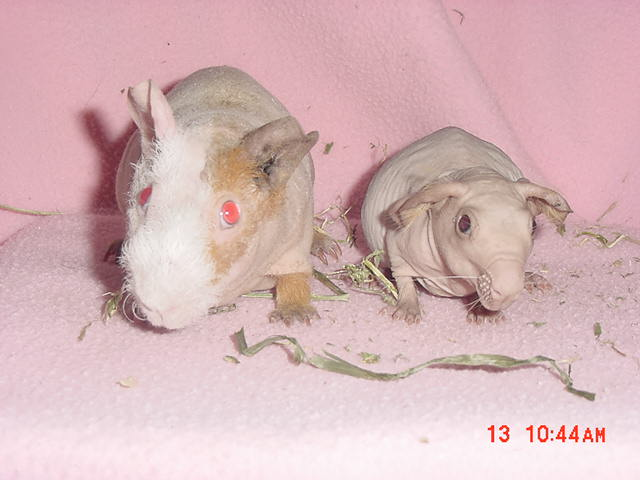
There are two types of hairless guinea pigs, Baldwins (above right) and skinny pigs (above left).
http://images03.olx.com/ui/1/14/85/14060985_1.jpg
Baldwins are a rarer breed of guinea pig and not yet widely available in the pet trade. They are born with fur which falls out completely by 6-9 weeks of age. Usually they have no whiskers. Baldwins tend to be smaller than the average guinea pig, and are also more fragile. They seem to have lowered immune systems, and breeders are working to establish hardier lines of Baldwins more suitable as pets.


Unlike some other completely hairless rodents, female Baldwins show no problems in bearing and raising litters. This puts less limits on a breeder when trying to breed Baldwin offspring. Breeding two Baldwin parents (homozygous) will produce all Baldwin young. Breeding a Baldwin to a standard-coated guinea pig will produce half standard-coated young and half standard-coated Baldwin carriers (heterozygous for Baldwin). Breeding a Baldwin to a standard-coated Baldwin carrier will produce half Baldwin young and half standard-coated Baldwin carriers.

Skinny pigs are much more common than Baldwins and can often be found at pet stores. They have coarse fur on their heads, feet and ankles, and the rest of the body is bald or covered in very short fine fur. The whiskers are short and curled. Skinny pigs were first introduced in 1976 by the Charles River Laboratory in Canada, and initially they were not a very hardy breed. They are still being widely used for medical research. Breeders have worked extensively with skinny pigs through out-crossing with coated guinea pigs. Most of the lines available are strong and healthy and can expect a similar lifespan as regular guinea pigs. It is still advisable to purchase skinny pigs from reputable breeders over pet stores.

Female skinny pigs also seem to have no problems with bearing and raising litters. Breeding two skinny pigs (homozygous) together will produce all skinny pig young. Breeding a skinny pig to a standard-coated guinea pig will produce half standard-coated guinea pigs and half standard-coated skinny carriers (heterozygous for skinny pig). Breeding a skinny pig to a standard-coated skinny carrier will produce half skinny pig young and half standard-coated skinny carriers.

Whether Baldwin or skinny pig, hairless guinea pigs have a higher metabolism to help keep warm than their furred counterparts. They will tend to eat and drink more, this is completely normal. Try to keep hay contained in a hay net so it will not itch and irritate their skin. A multi-vitamin formulated for guinea pigs can be added to their drinking water once a week. Do not use woodchips as bedding but instead a soft alternative bedding. Purchase a cage with a solid bottom and coated wire. A heating pad on LOW placed under one fourth of the cage will help keep them warm. Provide a nest box (not directly over heated area) with ample exit and entry space which they can retreat to. This will also help keep them warm. It is important to keep their cage clean and dry. Do not keep hairless guinea pigs near windows or in direct sunlight as they are very susceptible to sunburn.

http://pics.hoobly.com/full/E1KNIBY7JXQP38RH3V.jpg

Syrian Hamsters

Hairless Syrian hamsters are quite rare in the pet trade and are sometimes referred to as 'alien' hamsters. They have no fur at all on their bodies, and usually do not have whiskers. They have lowered immune systems which makes them more susceptible to disease, and they often will not live an average lifespan though it is possible. Female hairless hamsters do not make good breeders, as they do not lactate at all or enough to sustain their litter. Abandonment or cannibalism is common in these cases. Hairless hamsters should be produced by breeding a hairless male (homozygous) to a furred hairless carrier female (heterozygous for hairless). Half of the pups will be hairless and the other half will be furred hairless carriers.
http://www.aquatica.ltd.uk/images/Hairless-Rat.jpg
Care for a hairless hamster is similar to a regular Syrian hamster. To help keep warm they have higher metabolisms and will require some extra protein in their diets. A multi-vitamin formulated for hamsters can be put in their drinking water once a week. An aquarium with a secured mesh lid is best to help prevent escapes and scratches. Toys should not have any pointed parts and hideaways should have ample exit and entry room. Do not use woodchips as bedding but a soft alternative bedding instead. A heating pad on LOW under one third of the tank will also help keep them warm. It is very important to keep the enclosure clean and dry. Do not keep hairless hamsters near a window or in direct sunlight as they are very susceptible to sunburn.