Showing posts with label articles. Show all posts

Monday, January 11, 2010

Guide to Fish Compatibility

Fish compatibility is the most difficult subject in the industry, and the greatest topic of controversy among professional aquarists. Those of us at the Aquarium Professionals Group with many years of experience are still learning about the subject. The problem is that there are no definite right or wrong answers when it comes to deciding which fish we can keep together in an aquarium. Some cases are obvious . . . or are they? No professional aquarist in their right mind would recommend keeping huge freshwater Oscars with tiny Neon Tetras. Yet the fact remains that our most experienced aquarists have seen the most improbable combinations of fish kept together without any compatibility problems. So as we began drawing up the first draft of our articles for this up-date, the question was raised: Why bother discussing an aquarium issue that is so conceptual that there are no definite facts that can be related to the reader?

http://www.salt-city.org/gallery/files/1/40056e01c138c38660bd10276dec163d.jpg

The answer to that question is simple, although the execution is not so easy. There are far too many unknowledgeable and/or unscrupulous pet and aquarium stores out there that don't know or may not care when they sell you incompatible fish. They want your money, and most do not offer adequate guarantees that cover for example, one fish eating another. We therefore felt we should at least provide some basic guidelines and tips to help ensure compatibility. These generalities should be used as a tentative guide, keeping in mind that when it comes to fish compatibility, nothing is written in stone!

http://t3.gstatic.com/images?q=tbn:kOEzuWgnnHJWDM%3Ahttp://stuartbradleyphotography.com/images/Nothing-written%2520in%2520stone.jpg

(joke),When shopping for a fish that you're unfamiliar with, ask a lot of questions. Take the time to look the fish up in an aquarium reference book.

http://www.thereeftank.com/forums/attachment.php?attachmentid=71025&d=1260734503

If you're shopping in a new store, make friends with the staff and owners. They may develop a case of "conscience" before selling you a fish that's incompatible with your aquarium or another specimen you want to buy.

http://yxhealth.com/wp-content/uploads/2009/07/Conscience.gif

Check the livestock guarantees of the store you're shopping in. If they only have a 24 hour guarantee, or no guarantee (common these days with saltwater fish), they may have no incentive to guide you carefully when it comes to compatibility. If the fish you buy causes trouble but doesn't die, they may not take it back for credit.

http://i.ehow.com/images/GlobalPhoto/Articles/4669399/CashBack-main_Full.jpg

As a general rule for all saltwater aquariums, and most freshwater tanks, new fish should always be added in groups of two or more. This helps to spread out the aggression in the tank. An aggressive fish that's already in the tank cannot chase two or more newcomers at once. This gives the new fish an occasional break in the action and allows them some recovery time.

http://www.petguideweb.com/imagens/image/images1/How%20to%20Set%20Up%20a%20Saltwater%20Aquarium.jpghttp://www.glasshabitatsaquariums.net/images/615_CWAMaple.jpeg

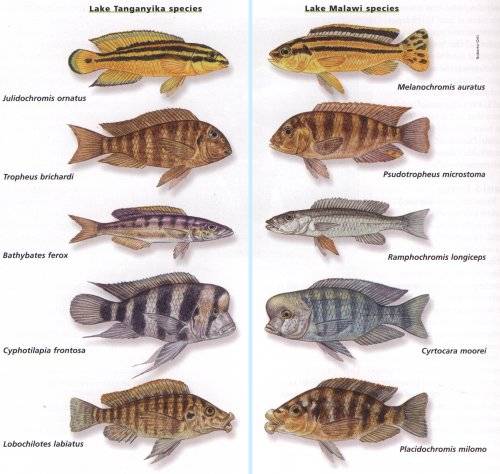
It is important not to confuse aggression with hunger or feeding habits. Just because a fish has a large mouth or eats whole fish in the wild, does not necessarily make it aggressive. Piranha are actually quite peaceful. So are most Moray Eels. African Cichlids are primarily herbivores (vegetarian), but are extremely aggressive. Even us so-called "experts" have a tendency to get a little anthropomorphic about our fish, by attributing human characteristics to our finned little buddies (see . . . there I go!). Fish behave almost entirely through instinct. An instinct to strike out at a tank mate that's invading a territory is not "acting mean". It’s simply an instinctual response to an external stimulus. That isn't to say that fish can't "learn". Anyone who's ever seen their fish splash water in the tank in order to get fed would disagree. In most cases though, what we perceive as mean or cowardly behavior, is simply instinctual behavior that is genetically programmed. The fish was literally born to follow these behavior patterns. Unlike dogs and cats, there is no proven way to modify instinctual behavior in fish.

http://www.corbisimages.com/images/AX933923.jpg?size=67&uid=5AF96A99-1B75-4208-A890-C03475D95A22

Nearly all saltwater fish, with few exceptions (such as seahorses), are aggressive to some degree. They come from a hostile environment, and behave accordingly.

All aquariums have a pecking order among their inhabitants. There will always be an "Alpha" specimen at the top of the order, and a series of less aggressive "Beta" specimens all the way down to the bottom of the pecking order. If you remove the most aggressive fish from an aquarium, another will take its place at the top of the pecking order. Generally, as long as no actual bodily damage is occurring, it's best to leave well enough alone. Even an occasional nipped fin is no real cause for alarm (Missing fins are another story).

Nearly 99.99 % of all saltwater aquarium invertebrates do not belong in a marine fish-only aquarium. Invertebrates are the natural foods of the fish. The one good exception are hermit crabs, which are somewhat protected by the seashells they carry. You can experiment with anemones, and maybe a lobster or shrimp, as long as you understand that it's an experiment, with a possible disastrous (and expensive) outcome.

As a general rule for both freshwater and marine fish, if you want to combine several specimens together that you're unsure of in terms of compatibility, use the following plan of action:

1. Determine the relative aggressiveness of each specimen you want to put together on a scale of one to ten by reading up on each and asking questions.
2. Buy the two most peaceful fish FIRST, and get the largest specimens you can find.
3. Each set of fish that follows should be a little more aggressive than the first, and smaller than the last set you added.
4. The last fish that you add should be the most aggressive, but also the smallest of the desired group.
5. Synopsis: Add the least aggressive fish first and make sure it will be the biggest fish in the tank. Add fish in order of increased aggressive behavior with each fish being smaller than the last. The most aggressive fish is added last, and should be the smallest specimen in the tank. Using this method allows the more peaceful fish to set up their territories first. By making the more peaceful fish larger, you give them a fighting advantage over the more aggressive species.

When considering the purchase of larger, more aggressive, or very active fish, beware of any definite statements made by salespeople that the specimen will be compatible. Statements like "Oh that will definitely work.", as opposed to "It should work." deserve a second opinion. If you're in doubt, they should be too.

http://mecsexy.smugmug.com/photos/376428784_QYNcK-S.jpg

Unfortunately, it is all too common to see incompatibility in action in the tanks at a pet or aquarium retail store. We've seen plenty of cases where every fish in a pet store tank is hiding except one, who's calmly cruising the tank looking for trouble. This can be of educational benefit though, in that one can learn first-hand about certain species that don’t get along with one another.

http://www.guyanagateway.org.gy/files/bass.gif

As a very loose general rule, with many exceptions, fish that are extremely hyper-active may stress fish that are extremely peaceful and slow-moving. Use caution, and watch how the other fish in the tank react to the fast-moving specimen.

If a fish is alone in an aquarium, find out why it's by itself before you buy it, even if it looks like a great specimen. It very well might be in "jail" for a serious felony or two.

Seahorses are rarely compatible with other saltwater fish. Freshwater Bettas (Siamese Fighting Fish) are never compatible with each other, and are rarely compatible with other long-finned fish or very fast-moving fish. Discus (freshwater) are extremely difficult to keep, and will rarely work in a community tank. Killifish (freshwater) should be kept by themselves in a small tank, and are not usually compatible in a community tank.

http://www.rocwood.com/images/O_seahorses3_SM.jpg

Fish with large mouths relative to the rest of their body usually EAT OTHER FISH! A Frogfish, Angler, Toadfish, or Stonefish may be cute in a homely sort of way, but they can swallow another fish nearly two and a half times their size! If you have small fish, some other fish to look out for in saltwater are: Groupers, Lionfish, Snappers, Jacks, large Triggers, Trumpetfish, and large Wrasses. Some of the fish to be cautious of, if you have a peaceful freshwater community tank, are: Scats, Pacus, all large Cichlids, Gars, Arowanas, Tinfoil Barbs, Bala Sharks, African Cichlids, and even Silver Dollars. Remember that even if the fish is a small baby specimen, it’s going to grow up!

If all the fish are crowded together on one side of the tank, and one fish is at the other end of the tank, that lone fish is probably aggressive!

Another sign that there’s an aggressive fish in a tank is if one or more fish are lying on their sides or nose-up at the surface of the water. This is a submissive posture. Watch the tank for a while and eventually, you’ll see the "culprit" go up and nip at the fish that are submitting. PLEASE NOTE: The reverse could also be true in this case. The store may have put one or two specimens in the tank that are too peaceful to fit into that particular community.

http://news.nationalgeographic.com/news/2009/02/photogalleries/monster-fish-congo-missions/images/primary/090213-04-monster-fish-congo-missions_big.jpg

(We hesitated to include this) Taxonomy is the classification of organisms in an ordered system that indicates natural relationships. Fish (as well as all other living things) are classified by comparing their anatomical, physiological and behavioral differences. The more similarities there are between two species, the more closely-related they are considered to be to one another. Animals are classified in the following order: Kingdom, Phylum, Class, Order, Family, Genus and Species. For example: Humans are classified as follows: Kingdom-Animalia (Metazoans), Phylum-Chordata, Class-Mammalia, Order-Primates, Family-Hominidae, Genus-Homo, Species-sapiens. Our "specific name" is Homo sapiens. Our common name is "Human". Taxonomy can apply to fish compatibility when you are considering purchasing two different fish that are closely-related (in the same Family or Genus). They might not get along if they are very similar in shape, color, feeding habits or behavioral patterns. This is truer in saltwater, where fish that belong to the same Genus will often not get along. In freshwater, larger, more aggressive fish that are also closely related may not be compatible with one another. We are in no way stating that any two closely-related fish are incompatible. In freshwater aquaria for example, most of the smaller, peaceful-community fish should be kept in groups or pairs. We are only saying that if you have a marine tank, or a freshwater tank with larger fish, caution should be exercised when considering a purchase of fish that belong to the same Family or Genus as a fish you already own, or another you’ve considered buying. If in doubt, give us a call.

Other factors to consider when buying two fish of the same Family or Genus, are:

The size of your tank (The bigger the tank, the more space there is for territories) The amount of decorations you have in your tank (Are there enough caves and hiding places? Sometimes buying more decorations with a new fish helps to establish new territories.) Do the fish come from the same geographical location? (If the answer is yes, they are less likely to get along.) Do the fish have very similar body shapes, coloration, or markings? (Even fish that are not closely-related may not be compatible if they look similar to one another.).

http://officespam.chattablogs.com/Berlin-Cylindrical-Aquarium.jpg

In most cases except one definite exception, two saltwater fish of the same species may not be kept together. Exceptions to this are some smaller, relatively peaceful marine fish such as Percula Clowns, Skunk Clowns (but not most other Clownfish), most Gobies, Blennies, some Damsels, and a few others. In some cases, marine fish of the same species may be kept in groups of three or more, but never in pairs. Exception: Two marine fish of the same species that were captured together in the ocean, and are being sold as a "pair" are always compatible if they’re in the same tank together at the store.

In freshwater, be careful buying mated pairs of Cichlids, Angelfish, large Gouramis, or any other fish if you have a peaceful community tank. Depending on the species, breeding pairs of fish, even smaller specimens, can get aggressive when it’s time to breed. By the way, occasionally there are "mated pairs" of saltwater fish offered for sale. If you love the fish and they’re healthy, by all means, buy them. Just don’t expect them to breed in captivity. The odds against them actually producing are greater than your odds of winning the lottery.

http://lawofattractionenterprise.files.wordpress.com/2009/10/islottery070824ms1-main_full.jpg

If you’re replacing a fish that died with another of the same species, always remember that two fish of the same species may not exhibit the same behavior. If you had a peaceful Humu Trigger, the next one may turn out to be "mean". If the last Blue Tang you had was aggressive, the next one you buy may be a "wimp". Just when a supposed "expert" claims that a certain fish is peaceful, someone comes along with a story about the same fish that became a holy terror in their tank!

If you have live plants in a freshwater tank, always ask if the fish you want eats plants.

If you have a freshwater tank, beware of buying brackish water fish for your aquarium. Brackish water fish are species that inhabit delta, marsh, coastal estuary and saltwater wetland ecosystems, where rivers feed into the ocean. These fish live in water that is slightly salty. Although they can survive for a while in 100% freshwater or saltwater, they will eventually die or do poorly if they do not get a fair amount (but not too much) salt in their water. This level of salt is too high for most freshwater fish, and too low for saltwater. Almost all aquarium and pet stores keep a wide variety of brackish specimens in their freshwater aquariums. Unfortunately, many of these stores will rarely inform you of the special requirements of these fish. They are: Archerfish, Scats, Monos, Anableps, all Gobies, Mudskippers, Walking Catfish, most Puffers (with only two true freshwater exceptions), most Mollies, Silver Sharks (a catfish species), Half beaks, Psychedelic Eels, Reed Eels, Bamboo Eels, and nearly all Pipefish (There is a true FW Pipefish, but it’s extremely rare).

http://www.fisheries.vims.edu/ctils/prey2/pipefish.jpg

Some Rough Fishes

That cute little fish you bought could turn into your biggest headache if you don't think before you purchase, so here are a few words to help you in your selection when considering buying that little cutie. Also here we will be talking about which fish will live with others in harmony. although even after careful selection, we sometimes get a small fish that will bully others a great deal bigger than themselves, but luckily this mainly happens at breeding time.

http://www.betta-fish-care.net/images/two-bettas-larger.jpg

Any fish can become a rogue, it doesn't necessarily have to be a big fish, as even some small species of fish can become quite dominating at times, especially at breeding time.

Generally when we speak of rogues people tend to think of the bigger species like some of the Cichlids,

http://www.accuracyingenesis.com/cichlids.jpg

and many of this group do get to a stage where they will only tolerate fish either the same size, or bigger than themselves. Other types of rogues are the ones that will uproot everything you plant, move vast amounts of gravel that leaves your tank like a moonscape, and even move small rocks if they are in their way. Others will ram the heater against the tank side, or pull the uprights from the undergravel filters, and on occasions decide to knock the lid off the tank and try their hand at jumping from the tank and onto the floor. Many of the big Cichlids will attack your hand if you try to clean the tank or move something that will alter their environment, while others will practically roll over and let you scratch their belly. Just by the last sentence we can see that not all Cichlids are the same, so we can't brand any fish as being a rogue.

So what causes a fish to be aggressive? Several things can cause this, many of which we can do our best to avoid. Fish near or actually spawning, or looking after young should never be trusted with other fish if the are of an appreciable size. At this time adult fish become very possessive about territory and the safety of their young, so now is one time you should leave well alone and let the fish get on with what they were born to do. In some situations we may have to remove either one or both the parents, but Cichlids in general tend to take care of their young right up to the time they are ready to spawn again, and it has been known for them to care for two broods of fry only weeks apart. Many of the Mouthbrooders also do this and can have more than one brood all trying to retreat into the mother's mouth. Great stuff.

Many Cichlids are very selective about their partner, and many once mated, will remain with that same partner to the end. If one dies, then it is sometimes hard to get the remaining fish to accept a new mate, and I have found this to happen with the Angels, the Jewel Cichlids, and the Firemouths, but again, not all fish are the same, but in general Cichlids seem to create a very strong bond with the partner they choose. In more than one instance I have had the remaining fish die within a short while after losing its partner.

Rogue fish are generally territorial fish and will set up an invisible area that they call theirs and will not allow outsiders to move into their area. Not much can be done here, but re-arranging the tank sometimes helps by confusing the fish as to where his territory starts and ends.

If the fish in question is causing harm to the more docile occupants of the tank, then your only option is to either move the aggressor, or move the peaceful fish. One should really consider a spare tank for these situations, and when not in general use it can be used as a quarantine tank, or for holding newborn fry, but it should always be setup correctly at the right temperature and ready for any emergency.

Even the common Zebra Danio can become aggressive if others in the tank are smaller or not quite as quick as it is. Keeping just one of these fish tends to cause this problem, especially if the Zebra has grown to an appreciable size.

Take the little Dwarf Gourami. A wonderful colourful fish that is usually quite docile, but catch him at breeding time and it's a different story. This little fellow can be a real terror if he is guarding the nest and will send most fish twice his size running in fear to the other end of the tank. This will happen with most of the Gourami species, and the Bettas.

So what can you do to stop it? If you have a fish that bullies others you could try to find something to distract it. Many fish that bully are single species in a tank, like a lone Oscar or Angel. You could try getting another to take its attention away, and this works in many cases.

For the fish that are getting bullied, try additional planting, more places for them to hide in the way of rock arrangements with hiding places that the bullying fish can't get into. As a last resort your LFS (Local Fish Store) might take the large fish in trade for some smaller ones that would be less problematic.

You should not confuse breeding actions with bullying, as most fish tend to look and act aggressive at breeding time. In the case of the Livebearers the males will constantly harass the females, at times leaving the female quite exhausted. Nothing much can be done here as this is nature's way, but if the females become stressed at all you could try separating them from the males for a while, preferably till they have given birth. Returning to the Cichlids for a moment. Many of these species will lock jaws and seem as if they are going to rip each other apart, and this can become quite scary at times, and others will chase their mate around the tank as if they were going to kill it, but in many cases it is just a normal breeding pattern.

Breeding Fish

Why breed fish?
There are many reasons. In our club, you get points in a nationally recognized Breeder's Award program. If I ever move to another area of the U.S. there's a good chance that a new club I join will accept the points I have earned at YATFS. Some people think they going to get rich - or at least support their hobby - selling the fish that they breed. Others do it for the scientific interest and fulfillment of seeing different species procreate. What better way to appreciate the "grander scheme" of life? And how about the ease of teaching the little humans in the household about the birds and the bees? (Although I must confess, I thought briefly that I had missed the boat when my then 4 year old daughter asked if the pregnant cat was an egg layer or a livebearer.) Still others do it for the competition within the club. On the larger scale, they compete to spawn species that are considered difficult or have never before been done.

http://www.agripinoy.net/wp-content/uploads/2008/05/koi_fish.jpg

How do you spawn fish?
First, you do some basic research. Read and/or talk to someone who already spawned the species. Find out what kind of species of fish you have. Is it a livebearer or egg-layer? What is the best ratio of males to females for that species? What is the best spawning age for the fish? What are the ideal tank conditions?

You also need to find out the best way to care for the fry. Some need to be left with the parents for a while. Others need their parents removed to prevent cannibalism. Some require special foods the first week(s). Others can subsist on average flake foods.

http://chestofbooks.com/crafts/scientific-american/Recipes/images/Fish-Spawn-Carrying-Apparatus.jpg

This article is not all inclusive. There are many fish that are considered "odd-balls." They break the rules and do not fit into any one category. They exhibit one or more unique spawning traits to set them apart from the others. That is why breeding fish is so intriguing to many of us. There's always another challenge or adventure in the hobby.

Livebearers

You usually can't tell exactly when these fish have spawned. The male constantly chases the female. The eggs are fertilized inside the female's body. The male transfers the sperm into her vent with his modified anal fin, called a gonopodium. But, if you know the average gestation period for the species and you watch the female's developing belly size and shape, you can estimate when delivery will take place. Gestation for livebearers can be from 25 - 45 days. Most, but not in all, livebearing female fish have a gravid spot near the base of their tail, which is a sort of window to the developing fry. A day or so before delivery, you can sometimes see the babies' eyes. Some species get a very square looking chest right before delivering. The most important reason for knowing all this is to know when to remove the female to a separate delivery tank. Sadly, most livebearers will eat fry. Even their own.

http://aquascapeindia.com/images/image2.jpg

Another trick with livebearers is that females can store sperm from previous mating for many months. Just because you lost the male doesn't mean the female will not any more babies. Also if you want to breed female A with male B, you may have to make sure that she is not with any other males whatsoever. Granted, the most recent male will most likely be the father of the fry. But it is always better to be extra careful with livebearers.

Generally speaking, the delivery tank should be 2.5 - 5 gallons. Use 70% water from the original tank, a sponge filter and a heater if needed. Live floating plants or artificial "spawning grass" will give the fry somewhere to hide. Lowering the lights will calm the female. Some theories say you should avoid exposing the gravid female to the air. So use a jar to scope her up and transfer her in water to the delivery tank. As soon as she is done delivering, remove the female back to either the original tank or a recovery tank away from the attentions of the male. Some species take up to 3 days to deliver their entire brood. Still others deliver a couple fry every 5-7 days. Again do some research.

Most livebearer fry can be feed crushed flake food from the day they are born. But all love baby brine shrimp and microworms! They are generally larger than egg-layer fry and are free swimming almost immediately. Therefore, they do not require parental care.

Egg-Layers

As mentioned before, egg- layer fry are often small and require special foods and/or varying degrees of parental care. Do the research. As far as spawning, these fish are divided into seven basic groups according to their different spawning styles:

http://city.hokkai.or.jp/~atsuyo/sujiko.JPG

Open substrate spawners
This is the most common spawning method, mainly used by cichlids. These fish often form permanent pair bonds. The female lays the eggs on a flat surface, such as a rock . The male works in close proximity with her to fertilize the eggs. These fish are often very good at guarding the eggs and defending the fry. Angels, Discus, Severums, Jack Dempseys, Oscars, Firemouths, Jewel Cichlids, Rainbow Cichlids, Rams, many Aequidens species, Sunfishes, Darters, Gobies, Damsels & Clowns.

http://freshwatercichlids.com/wp-content/uploads/2008/12/red-devil-cichlid.jpg

A compatible pair must be found. This is best done by raising a group of 6-8 fry to maturity and picking out the pairs as they form. Set them up in their own tank, condition them, watch & wait. If the pairs become regular egg-eaters or fry devourers, you can remove the eggs to be hatched away from their parents.

Although these do not technically hide the eggs like the next category, some will often bury them and move them from place to place in the tank. So don't think you lost the spawn until well past the time when you should see them free swimming. In addition, although this group are not considered Mouthbrooders some will pick the fry up in their mouths and move them to a safer territory, especially at night time. Don't think they are eating the fry until many are actually missing!

Substrate Spawners that Hide their Eggs
Several of these fish also form permanent pair bonds. Most however, do not; it is the female that takes on the care of the fry. Eggs are usually laid in a hidden area such as a cave, flower pot or shell. Because of their secretive nature, the spawning is usually not observed.

http://coralreef.noaa.gov/aboutcorals/coral101/reproduction/resources/spawning_cathcart.jpg

Included in this group are many Dwarf cichlids, Apistogramma, Nanacara, Namachromis, Pelvicachromis, Julidochromis, Lamprologous, Loricaria, Farlowella & Ancistrus. It is interesting to note that the males of the catfish species are the ones that take care of the fry.

Set up a pair with several spawning choices. Feed them well and wait for Nature to takes it's course. The female will lay the eggs within a cave or under a rock and the male will fertilize the eggs in unison. Sometimes you guess if spawning has actually taken place or not because the female disappears for about two weeks while she tends to her eggs. She drives the male out during this time. When the fry are free- swimming, she will bring them out and parade them around the tank. Pay attention to feeding whatever the fry require. It is often good to remove the male at this point. In another 3-4 weeks, the female can also be removed.

Mouthbrooders
An easy group of fish to spawn because they protect the fry the most efficiently. Also, they tend to be a very hardy group.

https://blogger.googleusercontent.com/img/b/R29vZ2xl/AVvXsEi16HVLooFTZvnTZBg5AFWH_enYVf1X2V_F97SfiQ3WG0AlecaniZu6nLZYmmGaJdpy3qkeo90WTkVd2cr3xcXcSzwwHuLDWK4zHKcss33QJv2Va1covzg5-r2s9f8WhuBKA2jgeFWKuw1a/s320/mouthbrooder.jpg

Set up a pair with rocks, gravel and caves. A few dither fish will help them keep their aggressions away from each other. Feed them well, Usually the male digs a pit in the substrate. The female, when ripe, will begin the circular spanning dance around the pit with the male. Eggs are laid, fertilized, then scooped up into the female's mouth. In some African Cichlids the female tries to " scoop up" the egg spots on the male's anal fin, thereby ensuring that the sperm has reached the eggs in her mouth. The eggs are incubated in her mouth for about three weeks. She will not eat at all in this time, unless the eggs have been lost or swallowed. Wait for about two weeks and move her to another tank. When the fry are old enough, the female will release them and guard them. Often, she can be seen chewing up and spitting out food for them. When danger approaches the fry fly at lightning speed to hide in the mother's mouth. When the young have been free swimming for about three to four weeks it is OK to remove the female. Sometimes she will eat them if she is ready to spawn again.

Egg Scatterers
This group consist mainly of those fish we call schooling types: Barbs, Danios, Characins, Tetras & Rainbows. They spawn as they school, scattering eggs all over the tank. The females release the eggs haphazardly; the males follow close behind, releasing sperm at the same time. Amazingly, the two meet and the eggs stick to whatever they land on. The eggs are usually eaten as fast as they are laid by the spawners and their tankmates.

http://www.my-tropical-fish.com/images/egg_scatterers.gif

To successfully save the eggs, set up another tank with lots of plants (plastic or real) or mops. Larger gravel or marbles on the floor also help to catch the eggs. Put in an air stone and a heater, if needed. Introduce a female only, and condition her on quality foods for a few days. One evening , introduce a male. The next morning they should spawn at sunrise. After a few hours, remove the pair. Cover the tank with dark cardboard or towels. The fry will hatch in three to four days. They are very tiny and are often described as slivers of glass on the walls of the tank. They require specialized food (infusoria, APR, etc.) at this stage. In a week or so, they will take live baby brine shrimp, vinegar eels, microworms and such. After two weeks they can take powdered flake foods. Growth will then be more noticeable. Rainbows are in this category, but breeders usually remove the eggs and hatch them like mop spawners.

Mop Spawners
Mainly comprised of Killifish, these fish lay their eggs in mops made of synthetic yarn, or in plants. The goal seams to be to hide the eggs. Included in this group Aphyosemion, Aplocheilus, Epiplatys, Rivukus, Simposonichthys and the previously mentioned Rainbows. What makes these fish different from the egg lay scatterers is that their eggs are harder and larger, and they only lay about 20 -30 a day. Corydoras catfish also seem to fit in this group in method, although they lay many more eggs. Typically, they will attach their eggs to anything in the tank including the mop.

The spawning tank setup is simple enough. Hang several mops, add a sponge filter and a heater if needed. Add a pair of fish. The female will lay the eggs deep in the mop or the plant. The male will then fertilize them. Sometimes they will turn right around and eat them. Another difference with Corydoras is that it is now believed that the female takes the sperm into her mouth and fertilizes the eggs which she is clutching in her pectoral fins, while sticking it on the preferred surface.

You must pick the eggs out of the mop daily and put them in a small container with anti-fungal medication added (methylene blue or acriflavin). Store the eggs in a darker place, at the required temperature. They will incubate for 14-21 days for killies and 7-10 days for rainbows. As the fry hatch, remove them with an eyedropper or pipette to another small container or tank with the correct water parameters and some Java moss or similar floating plants. Some can take live food right away, others need infusoria or APR.

Peat Spawners
This group is made up entirely of Killifish. Cynolebias, Pterolebias, Nothobranchus and Fundulopanchax. These are the fish we hear referred to "true annual" killies. In the wild, they have adapted to life in correlation with the rainy seasons. They hatch, grow and spawn before the next dry season comes along, during which their watery world as they know it dries up and they die. The eggs are able to survive in this drying period. When the next rainy season comes along: life anew.

Set up a 5 gallon tank for a trio of fish. In it should be a bowl that contains about 2" of peat moss. Some people like a slow bubbling sponge filter and some plants or a mop for the female to hide in. Feed the fish well, but away from the spawning container. The male will display himself above the peat moss. When the female is interested in spawning she will come close. They will seem to dive into the peat, where they will lay a few eggs and fertilize them. This continues several times a daily for many days.

Most breeders collect the peat and give the fish a new batch about once a week. The peat is gently squeezed and placed into some newspaper, lightly covered with a plastic bag overnight. The dried peat is stored in a zipped sandwich bag, in a dark place at a correct temperature.

Here is were you need to consult the charts in the killifish books for temperature and drying /incubation time. It can take anywhere from 2-9 months! And incorrect temperatures can cause poorly developed fry or low hatching rates.

When it is time to hatch the fry, the parents are most likely dead. Wet the peat, then submerge it in a couple inches of water in a plastic shoe box. Cover lightly to shade the eggs. With in a few hours, fry can be seen popping up over the layer of peat. Remove them with a pipette and put into another shoebox with a few inches of water and some peat moss or a floating plant. after about 24 hours, the peat can be re-dried for another two weeks. Try to hatch more fry. This can be repeated 1-2 more times. Feed the fry often and well, paying attention to water quality. Because these fish live such short lives, they grow quickly.

Nest Builders
As the name implies, these fish build a nest in which to lay their eggs. Fish nests are built with bubbles, mostly on the surface of the water using pieces of plants. The male builds the nest. The bubbles stay inflated because of a special mucous he has in his mouth when he blows the bubbles. The nest builders are mainly the labyrinth fished such as Gouramis, Paradise Fish, most Bettas and Hoplosturnum Cats.

http://www.erdingtonaquatics.com/tropfish/gourami6.jpg

Set up a separate spawning tank for the pair. A very slowly bubbling, aged sponge filter should be included to culture infusoria for the future fry. A couple snails will do the same thing, along with lots of floating plants. A heater will be needed. Some plastic plants or mops are helpful for the female to hide in. The key to the set-up is an upside down Styrofoam bowl or something similar, taped to the front of the glass of the tank, right at the surface of the water. There should be some dead air space inside the container.

Put the male into the tank, and do not add the female until he has started a bubble nest and she is ripe with eggs. When all conditions are right, the male will entice the female under the nest. He will wrap his body around hers until she releases a stream of eggs. He releases his sperm at the same time. Then he lets her go. She will remain motionless and sink for a moment or two, but the male will immediately go to work gathering eggs in his mouth and spitting them into the nest. When the female comes to, she will often help. This will continue for several hours. When they are finished spawning, the male will violently drive the female away from the nest. Now is the time to remove her.

The male will guard, fix and add bubbles to the nest for the next three days. When the fry begin to hatch, they will wiggle out of the nest. He will actively catch them and spit them back into place. He should not be fed during these 3-4 days. Otherwise, he might forget his job and begin eating the fry as well.

At the age of 6-8 weeks the fry will begin to develop their labyrinth organs. Covering the tank with plastic wrap or taping the cracks in the glass will keep the air temperature closer to the water temperature and you will lose less fry.

Some exception to the surface bubble nest are seen with the Croaking Gouramis and the Pygmy Gouramis. They build their nests inside a cave, so breeders usually use 2" PVC tubing pieces for them.

This Overview should be enough to get you interested in spawning some of your favorite fish.

Sunday, October 4, 2009

Birds and Fish Ponds

There are many species of fish-eating birds around the world. Many are not normally found fishing in small bodies of water, or are found only in oceanic or polar areas. Many predatory birds do not fish in smaller ponds, possibly either due to there not being enough fish of the right size in the pond to attract them, or not enough physical space to do their normal fishing maneuvers, or their not being "wired" to recognize small ponds as a place to fish, or their not normally being found around small bodies of water, or other possible reasons. For example, it could be that birds that skim water surface (skimmers, some terns, etc.) possibly do not frequent small ponds near beaches because the water surface is not large enough for them to work, or the airways around pond are obstructed by trees, etc.

Some species, as gulls and crows, are normally scavengers, and frequent garbage dumps. They clean up dead and dying fish in our waters and along our shores and are not normally found fishing for live fish around small ponds.

Predatory birds not only eat pond fish, but can transport diseases, algae, plants, and fish eggs (a problem if from trash fish) from other bodies of water into ponds. Birds may pollute a pond with droppings if the pond is small, or if they concentrate in great numbers at ponds (this usually only occurs at aquaculture facilities). All of these possible biological additions to ponds might present potential problems for the fish in a pond.

Various injuries to pond fish, including puncture wounds, suggest a predator is targeting a pond. Also, white droppings (on ground near pond), feathers, foot prints, missing fish, or pond liner punctures are other signs of bird predation. Fish-eating birds feed during the day and can eventually be seen and identified if the pond owner is observant.

All of the fish-eating (or scavenger) birds listed herein that occur in the United States are protected by the United States Migratory Bird Treaty Act, and thus cannot be legally killed. Additional laws throughout the world may also protect them and various other species preying on pond fish, e.g.,

Provide some fish and these birds will appear. Due to the good eyesight these birds have, a body of water is quickly investigated for easy prey. Birds, like humans and other animals, will seek the easiest free lunch possible. Some can eat or remove all fish in a small pond or tank. For them it is like "fishing in a barrel." So, choose fish that are not highly visible, or expect to lose some fish. The colors of rosy-red fathead minnows, goldfish, and koi stand out so well they become easy targets.

Of the various fish-eating birds that do/might frequent small ponds, we have the following groups (based on their method of predation):
(1) Those that dive from air and catch fish with bill = kingfishers; terns and pelicans are rarely in small ponds,
(2) Those that dive from air and catch fish with feet = eagles and ospreys are rarely in small ponds,
(3) Those that dive from water surface = cormorants, mergansers, various fish-eating ducks; rarely in small ponds,
(4) Those that wade in pond; or fish from edge of pond and floating plants, etc = herons (includes egrets). Personal observations about fish-eating birds around my ponds are included in the following comments.

DIVE FROM AIR
Kingfishers (about 90 species around the world) are represented by three families: Alcedinidae (river kingfishers); Halcyonidae (tree kingfishers); and Cerylidae (water kingfishers). Kingfishers around water normally dive for small fish, but also eat insects, crayfish, and frogs. All kingfishers kill their prey by beating it against a tree or by dropping it.

The local species in my area is the Belted Kingfisher (Ceryle alcyon). It will dive into a pond and puncture the liner (40 mil HDPE in my ponds) in shallow waters (usually 8" or less), causing leaks. I have hundreds of holes along the edge of a large liner pond (12 by 60 feet by 4 feet deep) (40 mil HDPE) from kingfisher bill punctures. They were diving after rosy-red fathead minnows, and eventually got all of several thousand fish stocked out. The fatheads swam in schools around the edge of the pond, presenting themselves as easy targets.

There should be overhangs of stone or boards, or netting, etc. to protect the shallow edge areas of a pond from predation and possible liner puncture. Overhangs also give places for fish to swim and hide away from bird predation, and also provide shaded areas for water cooling. Overhangs should be high enough above the water so birds cannot stand on the overhang and reach the water to catch fish.

There may be some protection for the fish if there are no limbs overhanging the pond that the kingfishers can rest on, and dive from, to catch fish. Bird netting stretched tight over a pond/tank can discourage kingfisher predation.

Terns are represented by about 45 species found around the world. Least Terns (Sterna antillarum) have fished in my largest pond (about 150 feet long), catching smaller fish as golden shiners, mosquitofish, sailfin mollies, and the young of other species. Even though the marsh extends up the bayou from the beach to within about 800 feet from my place, terns rarely fish in my ponds, and are not considered a problem in this area for small ponds.

Pelicans are not normally found around small ponds, unless those ponds/tanks are crowded production units of aquaculture facilities, where the fish are numerous and easy to catch. Then pelicans can be a bad problem. A local fish farm raising tilapia had such a severe problem with pelicans eating up their profits (several years ago) that they resorted to shooting the birds. The birds would perch on the sides of the 30,000 gallon tanks and dive in whenever they wanted a quick meal. The fish farm owners got caught.

Ospreys (and eagles) apparently need an unknown amount of space around a pond and an unknown amount of pond water surface in order to fly in and position themselves to grab fish near the surface with their feet. From personal observation, we can probably rule them out as being a problem on the small ponds of a hobbyist, which are usually less than about 30-40 feet in diameter. Also, the larger fish they hunt and catch are not normally found in small ponds. Local ospreys teach their young to fish on my largest pond, which is about 150 feet long, and has trees at each end.

DIVE FROM WATER SURFACE
Cormorants (Phalacrocorax species) are coastal rather than oceanic, while some frequent inland waters. They are found around the world, except for the central Pacific islands. All are fish-eaters, diving from the surface and propelling themselves with their feet. Their feathers are not waterproofed, which may aid in diving quickly, since their feathers do not trap air bubbles.

Double-crested Cormorants (Phalacrocorax auritus) are numerous in Mississippi, primarily due to the easy pickings of many channel catfish ponds. In some catfish farming areas cormorants have become so numerous (from feeding on the channel catfish) that catfish losses can be 20-30 %.

Catfish farmers are now allowed to shoot cormorants at their fish farms under an order issued by the U.S. Fish and Wildlife Service in March 1998. However, some studies indicate that cormorants learn to avoid getting shot, using movements such as diving, or moving to other ponds ahead of the shooter to avoid getting shot. The cormorant problem around Mississippi fish farms is still bad.

The fish-eating ducks (as "trash ducks" like mergansers, grebes, and others) are possibly rarely found on small ponds because of the small water landing surfaces of small ponds, or the normal absence of sufficient fish of the right size to attract such birds.

WADE
Herons are wading birds in the Ardeidae family. There are more than 57 species in the world, including tiger herons, bitterns, day-herons, egrets, night-herons, and the boatbill.

In my area the Great Blue Heron (Ardea herodias) is a bad pond fish predator, using its bill to catch tadpoles, frogs, salamanders, large insects, and fish (to about 8 in). These herons usually land in a clear spot near a pond and then walk up to the edge of pond to fish from the bank or while wading in the shallows. They will walk 100 feet or more to get to a well-camouflaged pond. A friend reported that a great blue heron landed on the bricked patio around a swimming pool, walked through an arched gate down a brick path to a pond (about 6 x 12 feet) that was almost surrounded by plantings and patio/house structures to fish out the koi.

It is just a matter of time until these herons find a new pond. They can fly into a small back yard. Unless stopped, a great blue heron will come back again and again until most (or all) fish are caught out of a pond, unless you can protect the fish. If the fish caught are too large to swallow they will peck the eyes out and leave the bodies on land around pond. They are bold and not easily scared far, probably due to their being protected and not used to being harassed; they are a pond nuisance in my area.

Put plantings or fences around pond so herons cannot walk up to pond edge. Fences also serve as a safety feature against children around ponds. The edges of pond should be greater than 18 inches deep to discourage heron wading. Some great blue heron predation can be decreased by installing bird netting, or by using decoy herons to scare the herons away.

The Little Green heron (Butorides virescens) is another pond nuisance heron in my area. They can land on objects near the pond surface, including floating plants, to fish. They will fish all the mosquitofish (added to keep mosquitoes under control) out of livestock watering troughs, and unless the farmer constantly replaces the mosquitofish, these birds end up causing a public health hazard by removing the fish that help keep mosquitoes under control. I suspect they clean out small pools and ponds all around, leading to mosquito and disease problems for humans and other animals. I consider them a worse nuisance than other fish-eating birds because they endanger human life and keep on causing the extra work of constantly stocking out mosquitofish. They are hard to defend against.

Any bird netting used on a pond or tank to exclude them MUST be at least a bird's head length plus neck length away from the water because they will stick their heads through some larger mesh netting (1.25" bar mesh) to fish in a pond or tank. They can learn to land on bird netting to use their weight to get netting closer to water in order to fish through netting mesh. These birds can also learn to use bread or crackers, etc. to attract fish within striking distance.

Both the Great Egret (aka American Egret)(Ardea alba), and the smaller Snowy Egret (Egretta thula) visit the larger ponds and bayou on my place. I have never seen them around the smaller ponds, most of which have plant screens or fences around them. From personal observation, these birds like to land as close to a fishing area as possible; they don't walk as far as the great blue herons to get to the water after landing.

CONTROL
Predatory bird problems should be considered when designing and building a new fish pond. Pond owners should expect visits from fish-eating birds and prepare for their control. Since the above birds are protected in the United States and many other places, we are left with the following ways to try to protect our pond fish (methods that physically exclude the birds work best; killing or trapping methods are not listed because of protection laws):
--stock out fish that are not easily visible in the pond (not brightly colored, or whitish, fish),
--cut limbs that birds can dive from that overhang pond,
--plant screens or other cover to prevent birds from getting (flying to, or walking to) to pond,
--put fencing around pond to prevent larger herons from walking up to pond (also serves as deterrent for children),
--make pond steep-sided and deeper than 18" at edges to keep wading birds out of pond,
--put overhangs around edge of pond that prevent birds from getting to fishes that like to circle ponds at edges (overhangs should be high enough off water so they will not serve as fishing platform),
--put a greenhouse around pond,
--install bird netting (keep tight) to discourage diving or wade-fishing or bank fishing birds,
--use decoys of competing large herons (to discourage other herons),
--use various noisemakers (e.g., gas exploders, fireworks, or bird distress calls) (but not too effective unless noises made at irregular intervals, come from changing directions, etc.),
--use fireworks for several evenings to disperse cormorants from their night roosts (can result in dispersed birds not going back to fishing at previous feeding sites),
--use visual devices as foil and cloth strips, flags, balloons or objects with or without eyespots, irregular flashing lights, scarecrows, and artificial decoy hawks or owls,
--use motion detector devices that spray water, or make noise, or turn on lights when activated,
--avoid using logs and rocks, etc. around/in ponds that can be used as fishing perches,
--get an aggressive dog trained to chase birds (this can be one of the best bird deterrents except when there are several ponds and the dog gets exhausted chasing the birds).

Koi Pond

What do some liner promoters and salesmen say about professional pond installations using concrete and rebar, plus mortar to hold the rocks?

(1) "One problem with concrete and mortar construction is that of cement alkali leaching out for some time after construction, poisoning the pond water with high alkalinity. It also leaves unsightly white deposit build-ups at the points of exit and on the surface of rocks in the waterfall."

NOT TRUE! If the concrete you use to pour the shell is a 7-sack mix with 40% pea gravel and stealth fiber mix, the concrete is so dense that no leaching can even occur. Also, because of the density of the concrete, it is not only waterproof, but stronger than normal 5-sack mix used to pour driveways, patios and sidewalks. Finally, if you coat the finished surface with Thoro-seal, one of several non toxic concrete sealers, it cannot leach.

(2) "When you use mortar mix to secure the rocks in a waterfall, the water that soaks into the porous mortar joints, leaches out alkali and phosphorescence that poisons the pond.

TRUE in the past, but not anymore. Regular mortar is porous, allowing water to pass through, dissolving and collecting the cement residue. This had been a major concern of mine for many years. After the completion of a waterfall, I would have to run the waterfall for two or three weeks, shutting it off every 4 or 5 days, and acid-clean the white alkali residue off the rocks that had built up. Then, when we were finished, we would have to acid clean and rinse out the pond.

Twelve years ago I discovered a secret formula that would render the mortar mix non porous and waterproof. It also makes regular mortar mix three times stronger. It is produced by adding one 45# bag of thinset (used to apply ceramic tile to a shower wall) to two bags of type S mortar mix. Once it cures, it becomes so dense, it is totally waterproof and will not leach any alkali after it cures (3 to 4 days). In addition, this mix is so strong in its holding ability that once it cures, a sledge hammer is needed to remove a rock. In most cases, the rock breaks up before coming free from the secret formula mortar.

It is not only waterproof, but it bonds very well with all types and textures of rocks. It will create a watertight barrier that comes in handy when building rock damns in the waterfall. The main feature of my special formula, is that it allows for much more creativity. You have the ability to raise the water level above the confines of the concrete shell without water leaking through the mortar joints, as in the case of regular type mortar mix.

This special mix is not for sale in the stores, and never will be, because I give the formula away for free! This discovery has revolutionized the effectiveness of mortar mix and its ability to bond, waterproof, and prevent alkali leaching.

A Dramatic Test

A 4,000 gallon swimming pool was converted into a concrete koi pond with two large waterfalls, held together with my new mortar mix, and an 8' x 12' island. The rocks surrounding the island, were also held by the new formula. When the project was completed, all the surfaces were given a quick, mild acid wash, and the pond was filled and dechlorinator was added. The following day, $3,000 worth of my own personal koi fish were transferred into the concrete koi pond. They all swam calmly around the island, inspecting every nook and cranny. None of them experienced any stress and they remained in their temporary quarters for three months with no incidents. If that dramatic demonstration was not enough to convert the skeptics, nothing will.

So what is the bottom line?

Pond liners cannot be guaranteed not to leak, for a myriad of reasons. Concrete and rebar ponds, if built properly, will stay leak- free for decades, if not generations. You be the judge. You're the one investing your hard earned money and time into it.

Below you can follow a concrete waterfall and pond construction, from beginning to end.

before.jpg (94112 bytes)

Site prior to waterfall and pond construction

before2.jpg (91627 bytes)

Another photo of site prior to waterfall and pond construction

Digital Design.jpg (112502 bytes)

Pre-construction, digital design photo one

Digital Design2.jpg (106812 bytes)

Pre-construction, digital design photo two


Excavation.jpg (76335 bytes)


Excavation of the waterfall and pond site

Rebar & Concrete.jpg (90985 bytes)

Laying of concrete

rebar2.jpg (90309 bytes)

Laying of concrete and rebar

finished.jpg (131265 bytes)

Finished waterfall and pond


Finished2.jpg (94751 bytes)


Another view - finished pond

Be as wise as an owl and as sharp as the many objects that can puncture a liner shell.

Happy koi, peace & joy.

Saturday, October 3, 2009

Common Horse Diseases

Anyone who owns horses should have a basic understanding of illnesses often found in horses, as well as how to treat those diseases. Veterinarians often live far away or are unable to respond to a call immediately, so owners must sometimes handle a sick horse on their own.

Some of these are horse diseases, while others are more accurately disorders or conditions common to horses. Whatever the case, it is important to understand each of them.

Colic

Perhaps the most common horse disease is colic, which is a broad term used to describe an acute gastrointestinal problem. In some cases, colic signals an impaction of waste in the intestines; in others, it might simple constitute a stomach ache from changing feed or eating too fast.

When horses colic, they tend to bite at their stomachs, roll in their stalls and refuse to eat. Their gums will be tacky (lacking moisture) and gut sounds will have lessened or ceased. Of the illnesses found in horses, this is perhaps one of the most dangerous, and veterinary attention is essential.

Laminitis

There are several horse diseases common to the hoof, which is one of the most sensitive areas of the horse's body. Laminitis refers to inflammation of the digital laminae, which are attached to the hoof wall and to the coffin bone. When a horse suffers from laminitis, it will become increasingly difficult for him to walk without pain.

Horses Deadly Equine Virus

Northern Virginia's first-ever confirmed case of a rare mosquito-borne disease that is fatal to most horses is spreading concern among health officials who worry that the virus is somehow moving beyond its normal stamping grounds.
http://media3.washingtonpost.com/wp-dyn/content/photo/2009/09/04/PH2009090402842.jpg

Eastern equine encephalitis, a noncontagious virus spread by mosquitoes, not unlike West Nile Virus, was diagnosed last month in a 28-year-old mare from Middleburg in eastern Loudoun County's vaunted horse country. The mare -- which had been riddled with health problems, including kidney disease -- was euthanized Aug. 6. Brain tissue samples sent to the National Veterinary Services Laboratories in Ames, Iowa, were examined, and three weeks later the lab confirmed the encephalitis diagnosis.

"Frankly, no one expected for the test to come back positive. This is a very unusual case, and a lot of us have been saying to ourselves, 'Gee, what does this mean?' " said Elaine Lidholm, a spokeswoman for the Virginia Department of Agriculture and Consumer Services. "We don't know if it's an isolated case or there's more out there in the environment."

What makes the case so unusual is that the horse had not traveled outside Loudoun County, its owners told state officials. The disease -- which more commonly goes by the name "triple E" -- largely has been concentrated in southwestern Virginia, especially the Tidewater region, where mosquitoes are plentiful.


"Up here, we certainly have mosquitoes, but not the same as the marshy areas," said Martin O. Furr, a professor of equine medicine at Virginia Tech's Marion duPont Scott Equine Medical Center in Leesburg. "I suspect it's a random outlier case. But I suppose it could be the tip of the iceberg ready to hit us."

Sandy Vine, a Middleburg horse trainer and show-jumping judge who owns three horses, said her animals receive annual encephalitis shots. Vine said the Loudoun case is worrisome, especially because most horse owners in the area have little knowledge of the disease and its symptoms. "You don't know if the horse was by itself or with others or if the owners traveled a lot," she said.

Virginia's agriculture department began tracking equine encephalitis cases in 2000. Since then, it has found 50 cases in horses, goats, emus and alpacas, none north of Madison, a small community between Culpeper and Shenandoah National Park, about 75 miles from Loudoun.

Although there are effective vaccines for the disease, there is no cure. And although many horse owners vaccinate their animals every six to 12 months, with recommended booster shots in the interim, others have forgone the $10 shots. In horses, the Eastern strain of the disease is 75 percent fatal, health officials say.

About 240 cases have been reported in humans in the United States since 1964, according to the federal Centers for Disease Control and Prevention, with fewer since 1984 because of the decreasing number of people living near marshland. Since 2003, there have been five human cases in Virginia. The fatality rate for humans is lower than that for horses, but those who survive the disease can be left with mild to severe brain damage. Transmission of the virus is most common in and around freshwater hardwood swamps in the Atlantic and Gulf Coast states.

The report of triple E so far from its home base caught many Loudoun veterinarians by surprise.

James Joyce, a veterinarian at Blue Ridge Veterinary Associates in Purcellville, said the case is "concerning because it's a reminder that it's now here." But Joyce cautioned that the disease is not contagious and is "very uncommon to this region."

William H. McCormick, a Middleburg veterinarian who has been practicing in Loudoun since 1974, said that he had never seen a case of triple E in Loudoun but that an older horse with a weakened immune system could be more prone to the virus. He added that the diagnosis, taken by itself, was no cause for concern.

"I've seen West Nile over the years, but never triple E. You certainly don't want to vaccinate horses for something they aren't going to get, but I would do it if they're traveling to Florida or the Eastern Shore," McCormick said.

Furr agreed, saying the horse, due to its age, could have become more susceptible to viruses because of cortisol-secreting tumors. "Still, in the years I've been here, this is the first case I've heard about," he said.

Friday, October 2, 2009

Horse Strangles Disease

Strangles is a highly contagious disease that affects a horse’s lymph nodes in its upper respiratory tract. It is caused by a bacterium called streptococcus equi. The name, strangles, was coined due to the strangling breathing sounds made by affected horses, caused by the enlarged lymph nodes of the jawbone.

The first signs of strangles are a high fever, poor appetite, and depression. Owners will also notice a thin, watery discharge from the horse’s nostrils. This discharge quickly turns thick and yellow. The horse’s upper respiratory lymph nodes become enlarged, most noticeably the ones between the jawbones. These can even abscess.

Strangles is not usually fatal to horses, but it can be.

Strangles can affect horses of any age, but most commonly infects those between one and five years of age. The disease is usually acquired after exposure to another horse that is shedding the streptococcus equi bacteria, either during or after its own bout of the illness. This commonly occurs when new horses are introduced to an established herd. Although the infectious horse may no longer show signs of strangles, it can still spread the bacteria. Around twenty percent of horses remain contagious for a month after all symptoms vanish.

While direct contact between horses is the most common way that strangles is spread, it can also be spread by contaminated equipment. Improperly cleaned and shared buckets, stalls, and tack can spread the disease between horses. Fortunately, the bacteria die fairly quickly in the environment.

Once a horse is exposed to the bacteria, it will begin to show symptoms in two to six days. If left untreated, it will develop abscessed lymph nodes within one to two weeks after the onset of illness. These lymph nodes will rupture and drain, and the drainage is highly contagious. Most horses will recover, but around ten percent of untreated horses die, usually from a secondary infection which causes pneumonia.

Rarely, the abscesses will spread to other parts of the horse’s body, such as the lungs, internal organs, or even the horse’s brain. This condition is called “bastard strangles.” It is uncommon and is usually fatal.

The treatment of strangles is dependent on the stage of the disease.

To control the spread of the strangles bacteria, any new horse with a vague or unknown health history should be isolated for four to six weeks before being added to the general population of the stable or paddock. Nasal swabs can ascertain whether the horse is shedding the streptococcus equi bacteria, but because affected horses shed the bacteria sporadically, one swab test is not enough. Three nasal swabs over a period of seven days are required before it can be assumed that the horse is negative for strangles.

Strangles can also be controlled by vaccinations. Although modern vaccines are more effective than those of the past, providing better protection with fewer side effects, they are not a complete guarantee against the disease. Still, vaccinated horses tend to have a less severe illness if they do contract strangles. Horses cannot contract strangles from the vaccine itself, since it is made from only parts of the pulverized bacterium.

If you suspect that your horse has strangles, notify your veterinarian to confirm the presence of the disease. The sooner a positive diagnosis is reached, the less “down time” the stable will have to tolerate. Also, if a horse begins antibiotic treatment in the early stages of the disease, lymph node abscesses can be prevented.

Old veterinary practices warned against using antibiotics for strangles because of the suspicion that it could cause bastard strangles. However, there is no evidence that this is the case. Usually, when horses are treated with antibiotics in the early stages of strangles, they will recover unless the antibiotics are not given in the correct amounts or are stopped too soon. Even if the horse is on antibiotic therapy, it must be isolated from the rest of the stable and herd to prevent the spread of the illness.

However, once lymph nodes have enlarged and become abscessed, antibiotic treatment will only prolong the horse’s illness. It is better to allow the abscess to open, or have the veterinarian lance it, so that it may drain. The best treatment at this point is to flush the drainage site, keep the area as clean as possible, and to maintain strict isolation of the ill horse.

If your horse was stabled near one who had strangles at a show or rodeo, it is reasonable to treat it with antibiotics for at least six days after exposure. This is because horses usually don’t show the first signs of the disease for two to six days. However, if your horse is kept in a barn where other horses have strangles, antibiotics will do little to prevent it from getting the disease.

Horse Rug

There are many different types of horse rugs, with various characteristics and functions. Therefore, the first step to choosing a horse rug is to decide which type you require for your horse. To assist you in this decision, following is a list of the main types of rugs and an explanation of their function:

  • Fly Rug. The purpose of this is to protect the horse from flies that bite or sting. They are more commonly and accurately referred to as 'fly sheets' rather than 'fly rugs', as they are typically a thin plastic sheet or mesh, rather than a fabric rug. One can also get 'fly masks', which are made out of the same material and are intended to protect the head (especially the eyes and ears) from flies. As they are a thin sheet they provide little warmth or insulation, although some can provide protection from wind and rain.
  • Turnout rugs. These are intended to provide insulation (warmth), to protect horses when they are outside. The amount of warmth depends largely on the amount of insulation, which is typically measured in terms of weight rather than thickness. Consequently, rugs with a moderate amount of insulation are referred to as Lightweight Turnout Rugs, while those intended for maximum warmth are known as Heavy Turnout Rugs. Some turnout rugs are resistant or impervious to rain.
  • Coolers. Although they may look like some turnout rugs, their purpose is quite different. They are intended to help the horse dry by 'wicking' moisture away from its coat, and at the same time protecting the horse from cooling while wet (a wet horse can quickly become chilled if it is exposed to cold and/or wind while it has a wet coat). They are typically used after exercise, when the weather is cool or windy, and removed once the horse has dried off. These are also known as 'sweat rugs'.
  • Rain sheets. These are typically a thin sheet, with little or no insulation. It is intended to keep the horse dry and can also provide protection from the wind.
  • Stable rugs. Also known as 'stable blankets', these are similar to turnout rugs in that they provide warming insulation, but are intended to be used when the horse is stabled rather than when it is outside.
  • Saddle rugs. A saddle rug (also known as a 'saddle pad') is placed under the saddle. It provides cushioning between the saddle and the horse, which protects the horse from the relatively hard saddle and at the same time protects the saddle from being rubbed down by the horse. As the horse tends to sweat under the saddle rug, due to the combination of exercise and the warming insulation provided by the saddle rug, some have built in 'wicking' materials to help remove the sweat from the coat.
  • Show rugs. A show rug is placed between the saddle and the saddle rug. It is a relatively thin but colourful rug whose main function is look attractive. As it has little or no other practical purpose, it is typically used only during exhibitions or competitions.
  • Summer rugs. More commonly known as 'summer sheets', these are thin sheets intended to keep dirt off of the horse's coat (e.g. if it rolls or lies down).
  • New Zealand rugs. A turnout rug which is made of waxed canvas. It provides limited warmth but protects well from wind and rain (provided that it is re-waxed as required) and is relatively resistant to damage due to the strong canvas material.
  • Riding rugs. It provides protection from the weather but is designed to be worn by the horse when it is being ridden.
Of these various types of horse rugs, perhaps the most commonly used is the turnout rug. The most important factor when choosing this type of rug is to select a rug of the appropriate warmth. Keep in mind that a horse which is too hot can be as uncomfortable as one which is too cold. Furthermore, a rug will discourage the growth of the coat and if too warm will actually result in the horse shedding its coat. Consequently, it is important both that the rug is heavy enough to provide necessary warmth but as the same time is not too warm. The warmth which an individual horse requires will depend on various factors:
  • Weather. On a cold winter day, one will need a warmer (heavier) turnout rug than on a cool autumn or spring day. If there is wind, additional protection is required due to the wind chill factor. Likewise, if there is heavy rain, the insulation provided by the horse's coat and by the rug are both reduced, unless they have a rain resistant cover.
  • Health and Age. Horses which are young, strong and healthy have less requirement for a warming rug than ones which are not. On a cold day, it may make sense to put a heavy turnout rug on a sick or old horse, when a younger horse in the same field may be fine with a light turnout rug or no rug at all.
  • Thickness of coat. A horse with a thick coat will have less need for a rug than one which has a fine coat, or which has been clipped.
  • Exhibiting. A horse with a thick coat generally does not look as attractive (in the eyes of most people) as one which has a thinner coat. Consequently, horses being exhibited usually have a rug which is warm enough to discourage growth of their winter coat. Such coats are relatively heavy for the horse's circumstances, as they need to replace the insulation provided by the natural winter coat rather than merely supplement it. Likewise, summer sheets and show rugs are for the needs of the exhibitor rather than the horse.
  • Number of rugs. The above factors will determine the number of rugs required. For example, a young and healthy horse in a mild climate may not require a rug at all and may be happier without one. In a colder climate, a healthy horse may need only a light rug to be used during the coldest days. An elderly or sick horse may need multiple rugs, depending on the situation (e.g. uninsulated waterproof coat for summer rain, lightweight turnout rug for autumn or spring, and a heavy turnout rug for winter).
Once one has decided on the type of rug plus (in the case of warming rugs) the required weight, one can then look at the materials, quality and features which you may require. Some common items and features to consider are:
  • Antibacterial. Some rugs are treated to be antibacterial.
  • Breathable. Breathable rugs allow sweat to evaporate and air to access the coat, features which make the rug more comfortable and healthier.
  • Coverage. Rugs generally cover the body. Some also have neck covers, either as part of the rug or an a detachable extra.
  • Friction points: Rugs can rub, especially if worn by active horses or when the horse is working. The main points affected are typically around the shoulders and chest. To prevent this, some rugs have anti-friction fabric at these points to allow the rug to easily slide and move without rubbing the coat.
  • Hooks, loops, buckles, straps and attachments. These should be strong, easily opened and closed, and firmly attached.
  • Insulation. The amount of insulation is typically expressed in grams per square meter. For example, a '300g' rug has 300 grams of insulation per square meter of rug. The actual rug will weigh more than this, as this is only the weight of the insulation itself and does not include the weight of fabric, straps or buckles. In general, the heavier the weight, the warmer the rug. However, this is not a precise measurement as there are different types of insulation, which vary in terms of quality and effectiveness.
  • Rain. A rug may be unsuitable for rain, or be rain resistant, or rain proof.
  • Tear Resistant or Rip Stop. Rugs may use fabrics or weaves which are resistant to tearing, and in the event of a tear resist the tear becoming larger.
  • Washing. Machine washable rugs are more convenient.
  • Wicking. Remove sweat and moisture from the coat.
Once you have decided on the above, your requirements should be well defined in terms of type of rug, amount of warmth required and the various features which you would like. At this point, it is mainly down to quality and price. As in most things, you get what you pay for, so the better quality rugs are correspondingly more expensive. If your budget is limited, or you will only use the rug infrequently, then an inexpensive rug may be appropriate. However, if your horse will be using the rug frequently, it is usually worth investing in a better quality rug which will last. In addition, if your horse is active or frequently rolls, it is important to choose a sturdy rug which can resist this use.

Horseback Riding

How long have you been dreaming of horseback riding?

Have you been considering taking horseback riding lessons?

There's an old saying:

"Every little girl wants to ride a horse - and the dream never goes away."

While horseback riding isn't just for girls, the percentages are much higher for women than men. A large group of adults in the 40 - 60 age group are starting horseback riding lessons! So - whether you're young or old - it's never too late to chase that dream of riding and seriously consider taking horseback riding lessons.

Whatever your age (if you care to divulge it!), the DESIRE to ride can be quite strong. It's not unusual to find yourself daydreaming and yearning for the opportunity to ride.

Are you wondering, like many of these, how to get started with horse riding lessons?

Life's issues, work, family, etc. may squelch the desire at times but, from what I've learned over the years talking to lots of folks, that desire is always there. Many in that 40 - 60 range are now financially able handle horseback riding lessons - but aren't sure how to start.

Yet some simply can't afford lessons, let alone keeping their own horse. But they want to learn enough about riding so they can go on a trail ride or go with a friend.

So what's the secret to getting started?

There are books specifically for the new or first-time rider. The goal is to teach most of the basics at home, before you take formal lessons. It saves you time and money in the process - and when you do go to the stable to start formal lessons you'll sound like an experienced rider 'cause you know the lingo.

There's lots of background material, understanding of horses, breeds, gaits, styles, etc. that is good to learn and that will help you get ready for horse riding lessons when you're ready. There's no reason to pay someone lots of money to teach you those things when you can learn a whole bunch of it by yourself.

Learn many of the secrets the professional instructors use before you ever put your foot in the stirrup. Imagine - trail riding in the hills, mountains or the beach. Enjoying the thrill of riding, handling your horse and fulfilling that dream.

Act on that DREAM of riding - start soon with horseback riding lessons! You'll be glad you did.

Ready to start chasing that dream of horseback riding? There's no better way to start than to learn from expert instructors.

Horses Sleep and Behavior

http://wpcontent.answers.com/wikipedia/commons/thumb/a/a2/Biandintz_eta_zaldiak_-_modified2.jpg/180px-Biandintz_eta_zaldiak_-_modified2.jpg

These parts work together to keep the horse's legs in a standing, locked position. While your horse may appear to be awake, he is likely asleep enough to kick out at you if you were to approach him unexpectedly.

Horses will sleep about 3 hours out of the 24 hours in a day. They will sleep for brief periods at a time, either standing or flat out on the ground. During good weather conditions, you will often find them snoring (too much weight on the respiratory system) and twitching. Each horse has his own schedule. Horses that are confined and worked daily often take up time spent in drowsiness, where they appear awake, but are really 'off' in another world. Your horse may be in this state more than the others, or he may prefer to sleep deeply when there is no activity around.

Horses have several stages of sleep much like we do -- drowsiness, Slow wave sleep (SWS) and Rapid eye movement sleep (REM).

Many horses are affected by the lack of sleep they receive, and often exhibit this need during their training times. If you are having problems with your horse, you need to look at leadership as only one of the reasons for your horse's behavior. Feed may also be part of your horse's attitude problems, or your horse may be suffering sleep deprivation.

"Training alone is not a substitute nor a cure for all behavior problems."

According to Marijke van de Water, horses need to lie flat out in order to experience deep sleep with REM. Sleeping by standing up only allows them a 'short wave sleep' designed to let them rest while enabling them to take off at a gallop if alerted to a predator. Horses also suffer from disturbed sleep cycles when barn and yard lights are left on at night. This common practice can alter coat growth in the fall, encourage early shedding, and interfere with the production of growth hormone (a hormone secreted by the brain after dark) that not only determines hair growth but also has a positive effect on energy, metabolism, weight loss, strength, fertility, immunity, memory, behavior and sleep patterns. Marijke suggests you experience how this feels yourself by sleeping several nights with a light on. (Her book, below, is a fabulous study on horse behavior, feeds, nutrition and natural supplements and products for your horse).

A horse that suffers from serious sleep deprivation will often doze off while you are standing him in the arena, talking with friends. (Narcolepsy) can be dangerous, as the horse's knees can buckle while you are on him.

It's important that we recognize sleep problems in our horses when trying to diagnose another issue. Watch your horse during times when no one is around; when it's quiet, and the lights are off. You may be surprised at how often he does sleep, or be alarmed at how little he does.

Understanding the mysteries of how horses sleep may unlock clues to their behavior.

Man and Horse

The association linking man and horse is a long-term one. However interacting with horses is forever simpler and even more agreeable once you possess compassion and knowledge. In order to be able to get along with horses, a person is required to comprehend their way of thinking, in order to be able to anticipate a horses response, you first have to comprehend how horses think and why they react in particular ways. A sound knowledge also instills trust for both parties, man and horse.

http://etc.usf.edu/clipart/63200/63286/63286_man&boy_lg.gif

When put in a dangerous circumstance, a horse's natural reaction is one of escape, and hence its view on life is one of weakness as opposed to that of strength. As people, the way we respond and think in particular circumstances is dependent on our background and experiences. Horses acquire their education in the same way, which is the reason that thorough basic handling and training are so valuable.

A person can by no means force a horse to act counter to its natural reactions, which is to be startled or scared. Nevertheless with competent education we are able to decrease these reactions and teach the horse, in an encouraging way, that a specific circumstance or object is no need for worry.

Horses are sociable herd animals, looking for the companionship of other horses, not to mention additional animal companions and even people. Even domestic riding horses kept together will make up their own 'pecking order'.

Whether it is the stallion in the end stable that whinnies the most as feed time becomes due or, as a lot of competitive riders testify, their retired champ pushes on the yard gate wanting attention as soon as its owner walks into the stable in the morning.

Now days, it is commonly acknowledged that a horse responds the most to encouragement as well as praise from the rider and trainer in order to ignore its born instinct of flight and anxiety. 'Breaking-in', a phrase previously connected to a young horse's initial training to be ridden, has nowadays generally given way to expressions such as 'starting', which implies a good deal less the perception of domination, but one that focuses more on a functioning relationship.

Whether it is a disabled youngster courageously loving the companionship of horses as a part of their treatment to the most successful horse riders on the planet, a mutual bond, one comprising of trust and understanding among horse and rider, is being fostered.

A horse looks at human interaction as members of its herd. In a herd hierarchy, a humans logical thought processes provide him or her a marked advantage. This is the reason the bond involving man and horse has performed fantastically throughout the ages and is the reason why man is able to be in command of an living animal which is numerous times stronger and more powerful than them.

A rider in their initial instruction is going to regularly be told to not be worried or anxious. Even though at this point in their training a rider needs to be practicing on an experienced horse and as a result should find it easier to relax, the fact that horses require assurance and direction from you is a point to keep in mind to develop from the beginning of any riding instruction.